
Investment Casting Manufacturer — Lost Wax Precision Castings
Valve and pump castings, impellers, brackets, pipe fittings, housings and made-to-drawing parts in stainless, duplex, carbon and alloy steel, nickel and cobalt alloys, bronze, aluminum and titanium. Every product page carries the full parameter table and a technical drawing that redraws to any size you pick.
- Full dimensional tables on every product
- CF8M, CF3M, CA6NM, duplex, WCB and 60 more cast grades
- Quotations answered within one business day
Castings by Category
Browse by part family. Every product page lists the full parameter table, the alloys the part is supplied in, the tolerance grade held, and a direct quotation path.
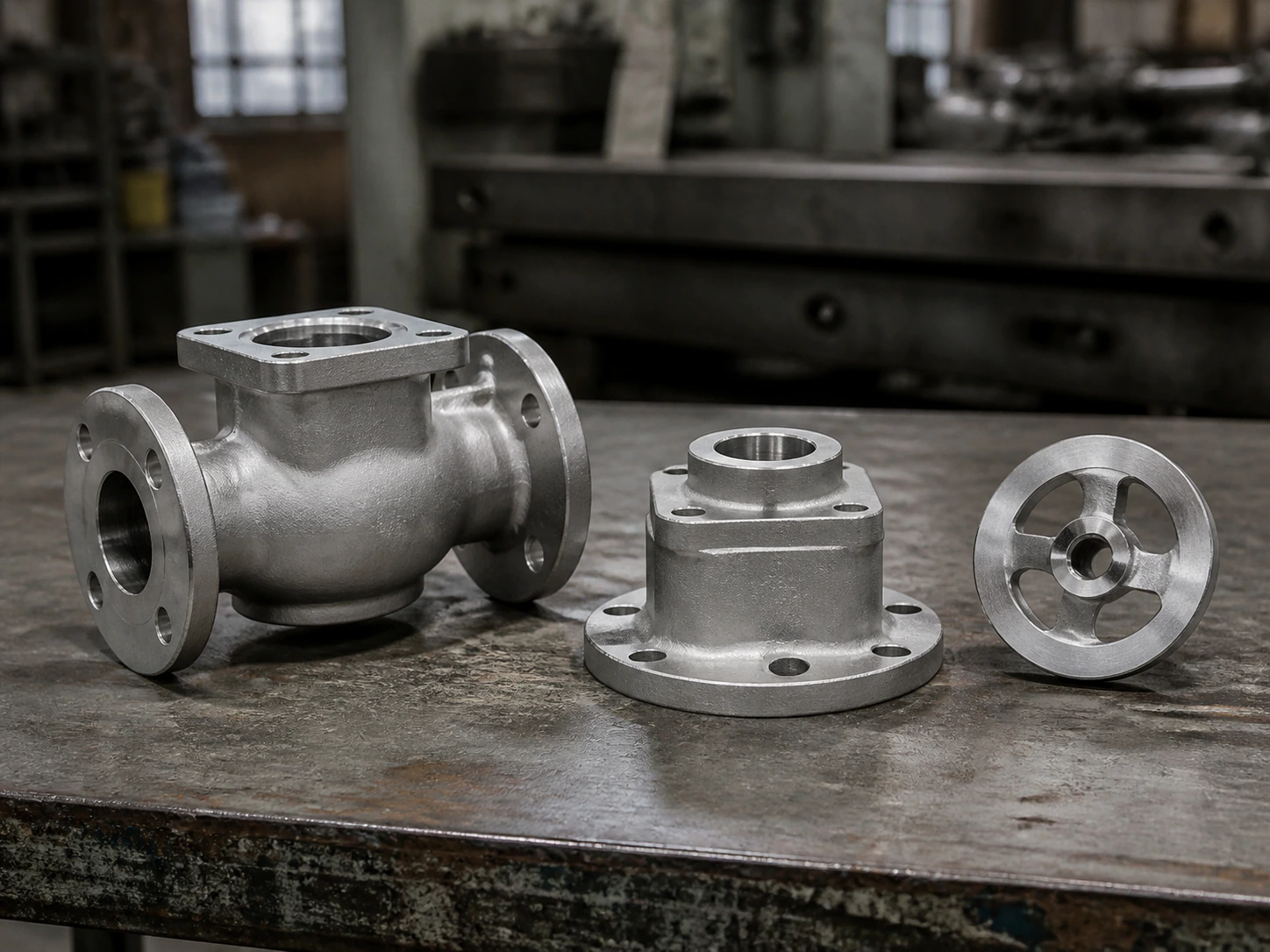
Valve Castings
Investment-cast valve bodies, bonnets, discs, balls and seats in CF8M, WCB, CA6NM and duplex, machined to ASME and…
Browse the family →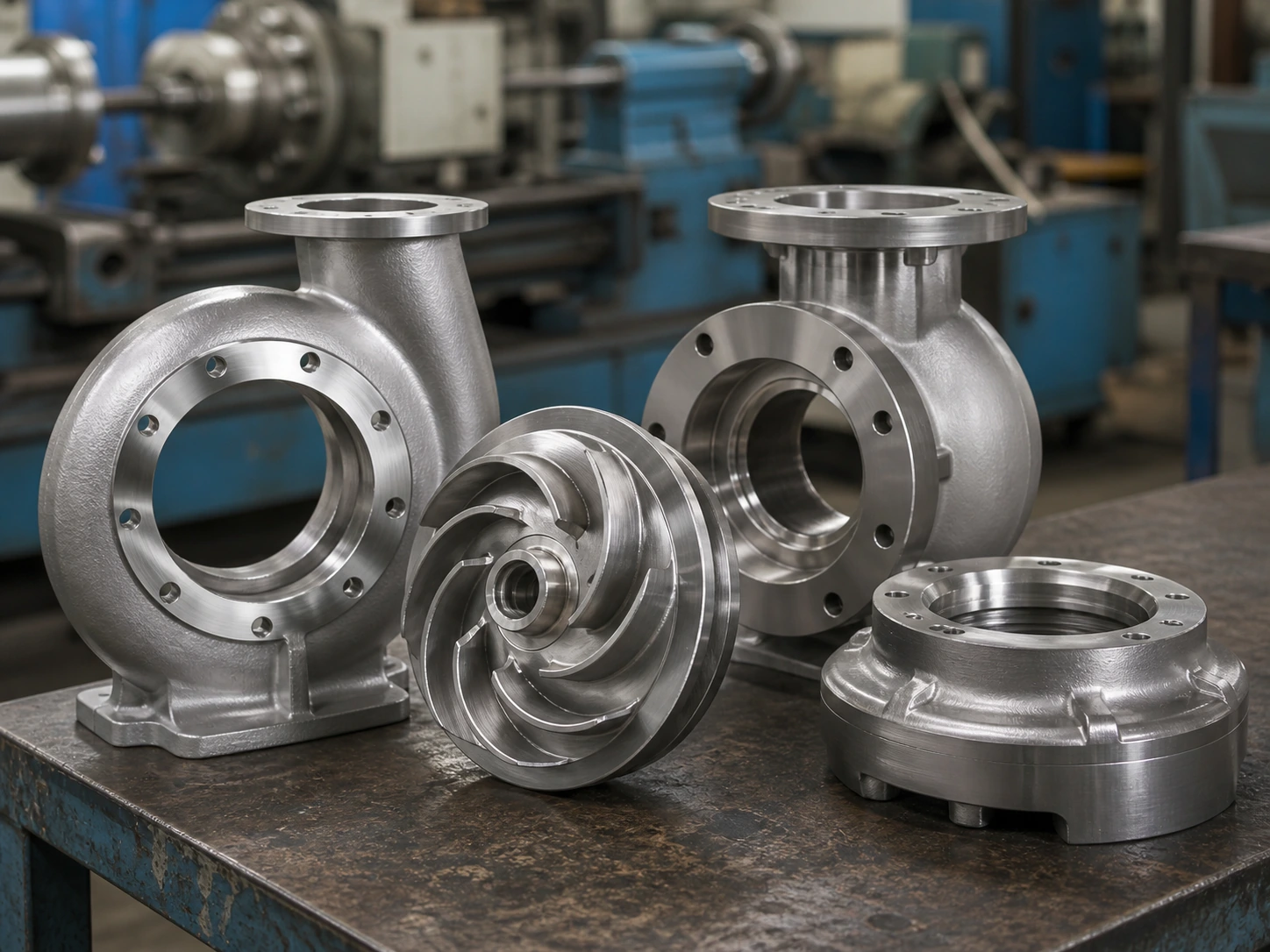
Pump Castings
Pump housings, volutes, covers, wear rings and diffusers cast to net shape in stainless, duplex and nickel-aluminum bronze…
Browse the family →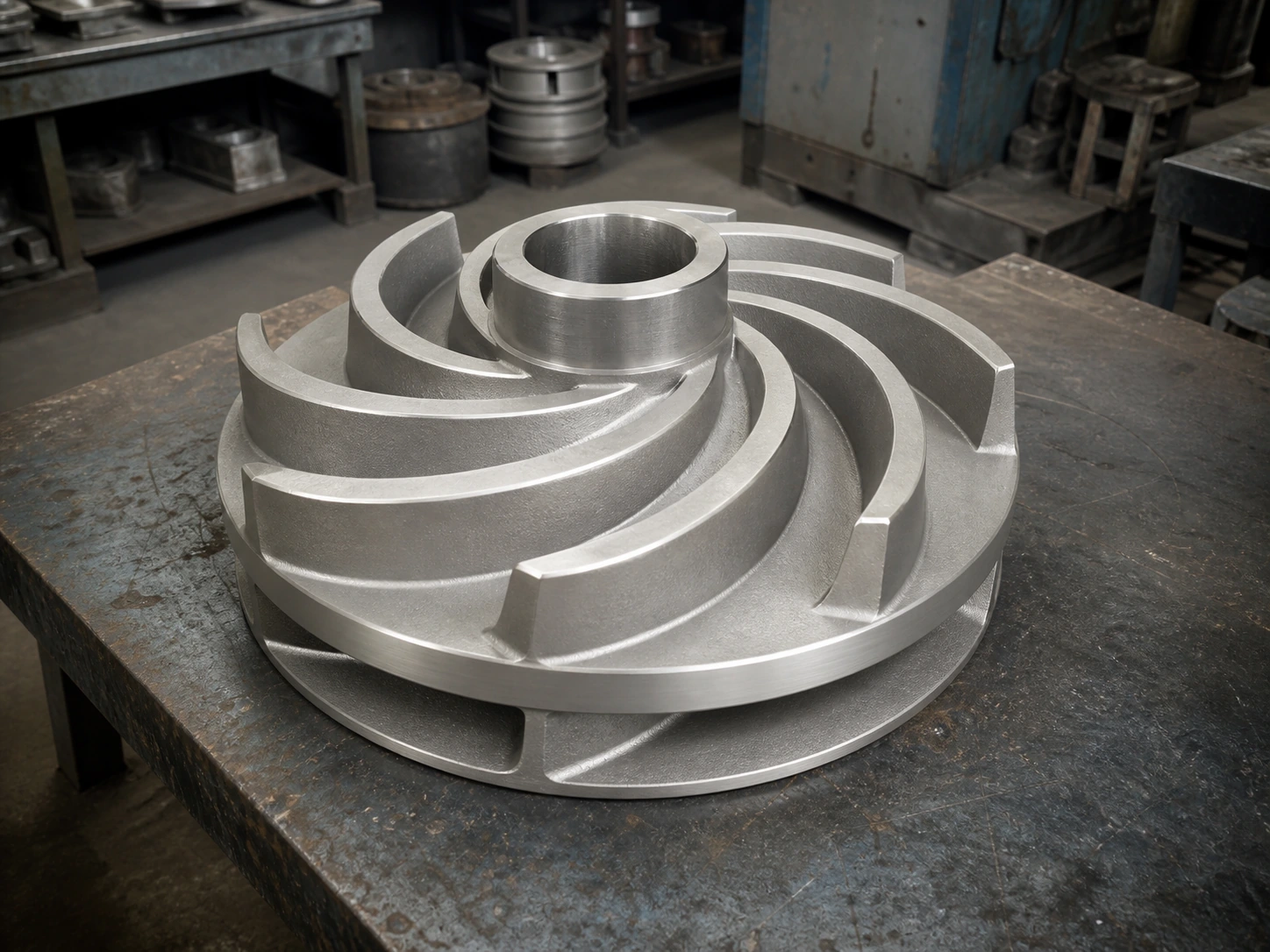
Impellers & Rotating Parts
Closed and open impellers, turbine wheels, rotors and fan wheels produced by lost wax casting where blade profile…
Browse the family →
Brackets, Levers & Arms
Mounting brackets, levers, arms, forks, yokes and clevises cast to shape with the machined hole pattern and boss…
Browse the family →
Pipe Fittings & Connectors
Elbows, tees, couplings, reducers, nozzles and flanged connectors cast in stainless and alloy steel for pressure, sanitary and…
Browse the family →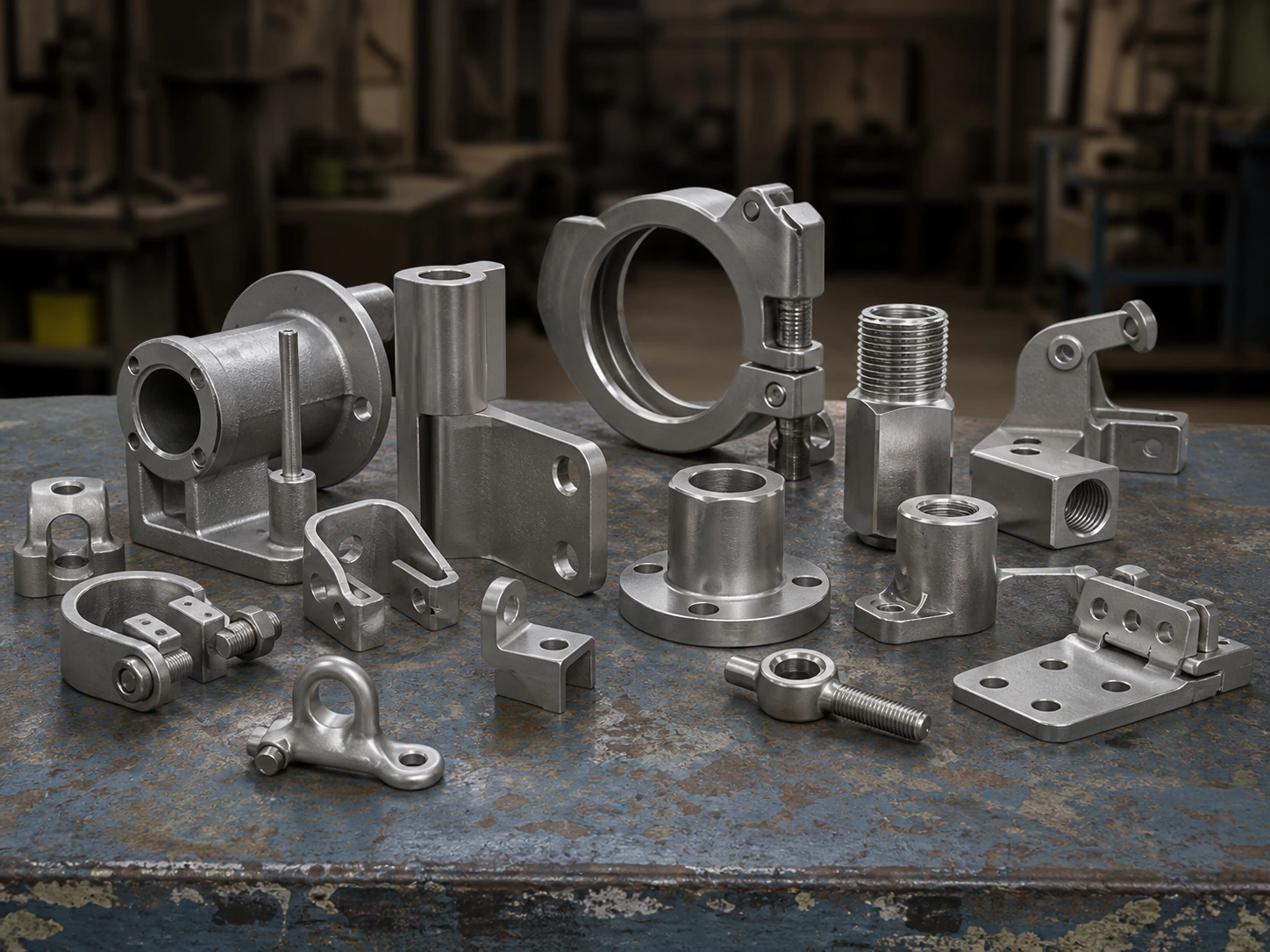
Housings & Enclosures
Gear housings, bearing housings, gearbox covers, manifolds and sealed enclosures cast hollow with cored passages and controlled wall…
Browse the family →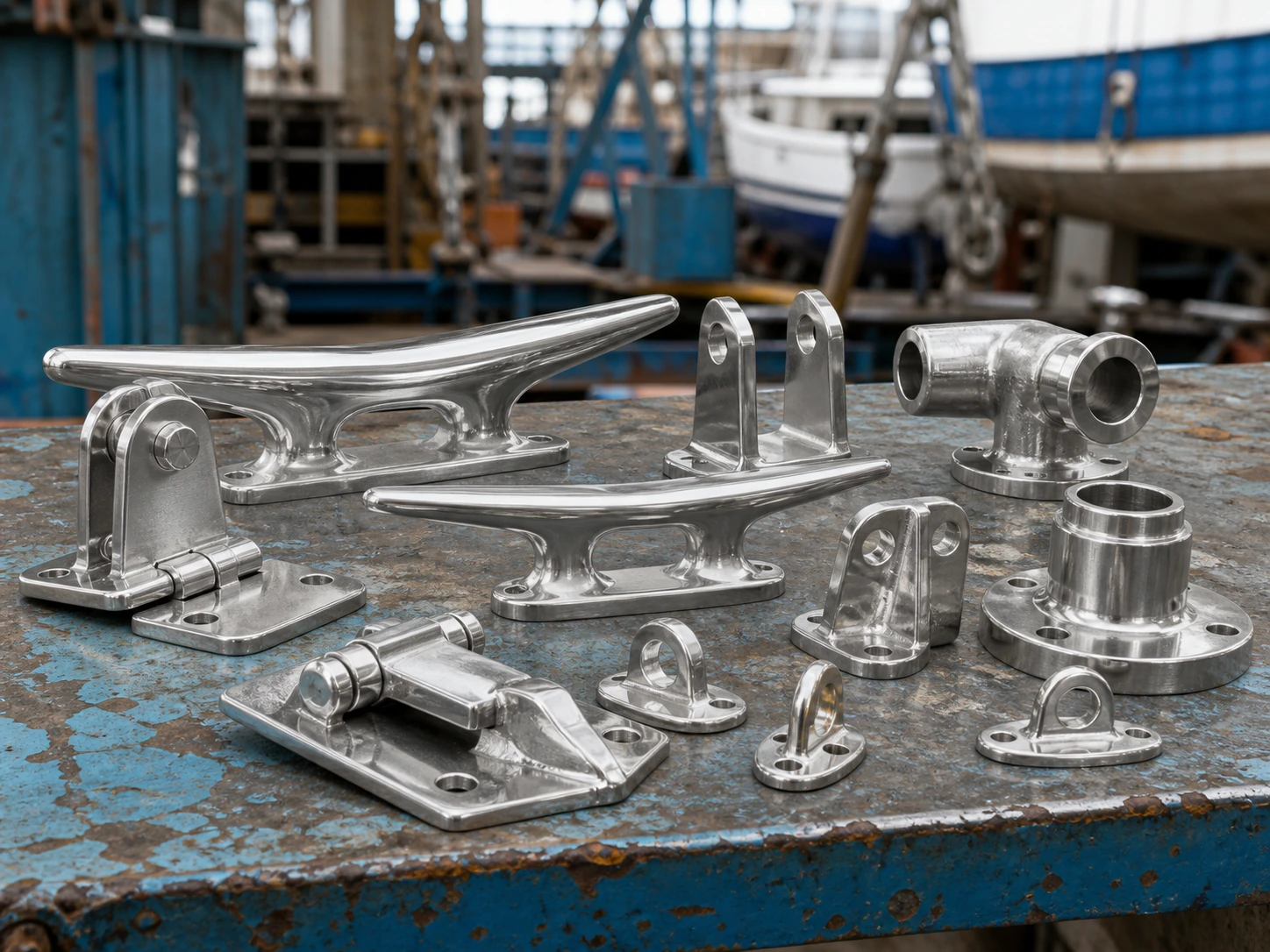
Marine Hardware Castings
Deck hardware, cleats, chocks, rudder and propeller components in CF8M, duplex and nickel-aluminum bronze for permanent seawater exposure.
Browse the family →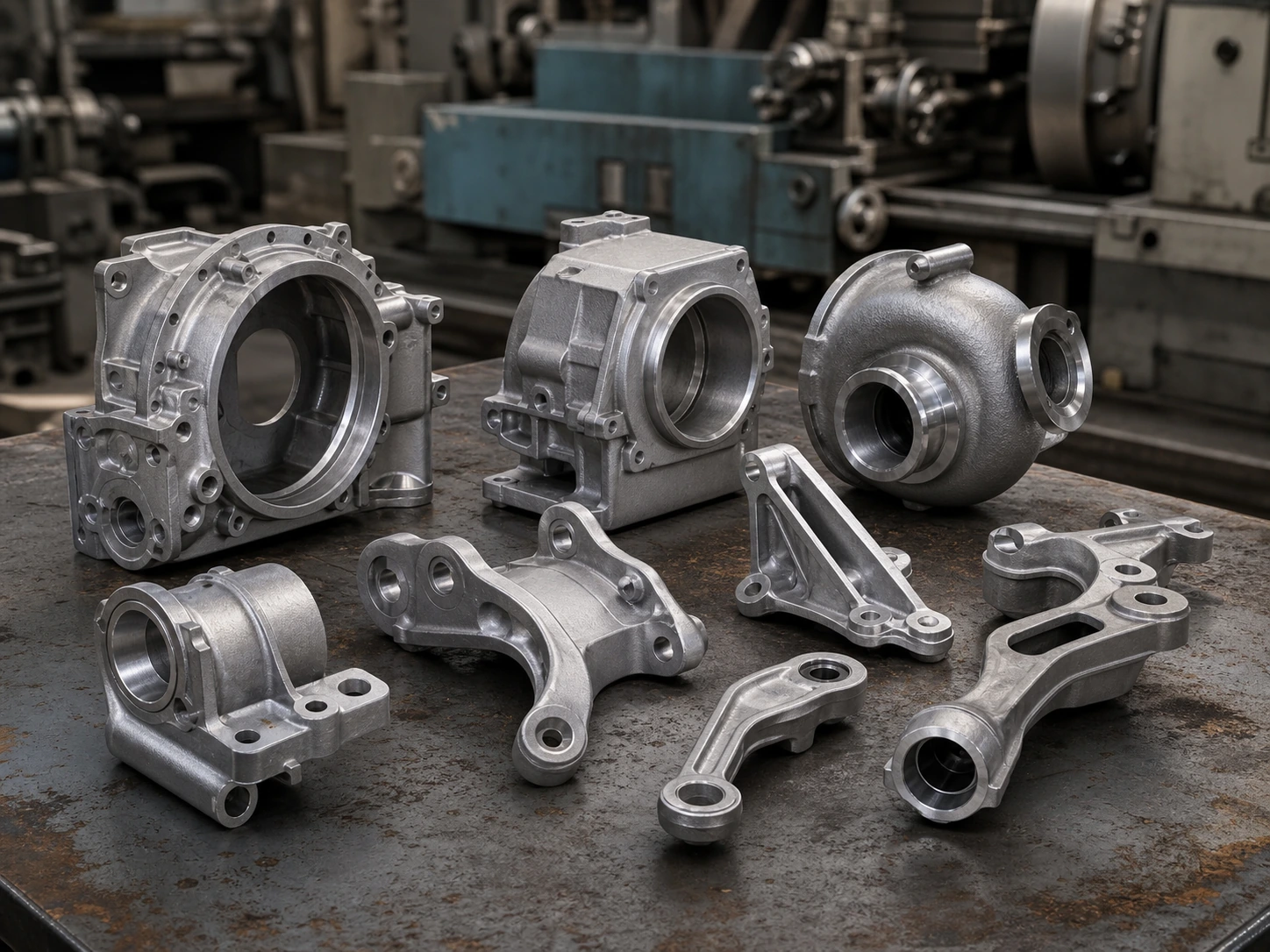
Automotive & Vehicle Castings
Turbocharger, exhaust, steering and driveline castings in heat-resistant stainless and low-alloy steel, produced to PPAP-ready dimensional control.
Browse the family →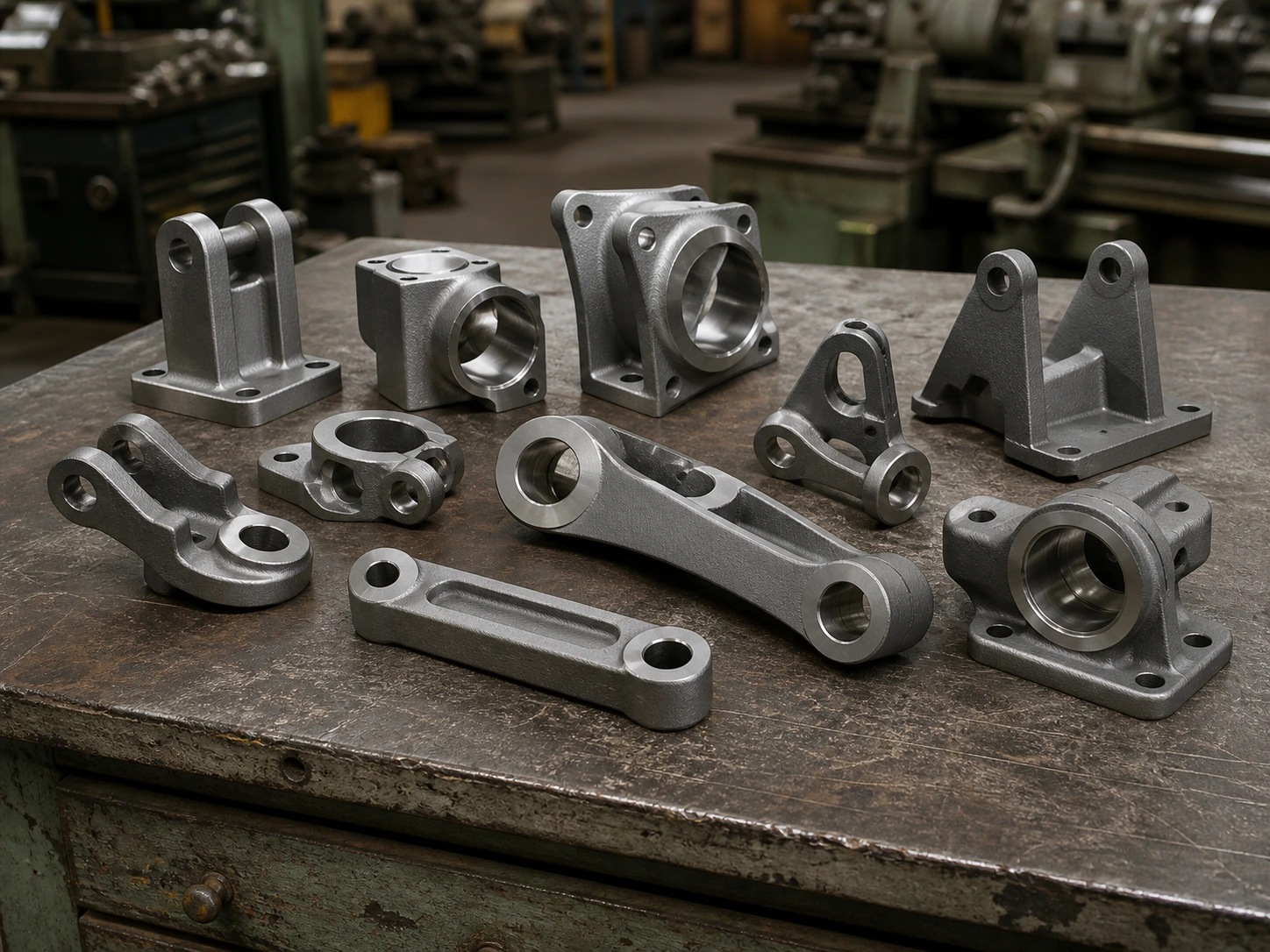
Industrial Machinery Castings
Gear blanks, sprockets, coupling hubs, cams and frame components cast close to final size to cut machining stock…
Browse the family →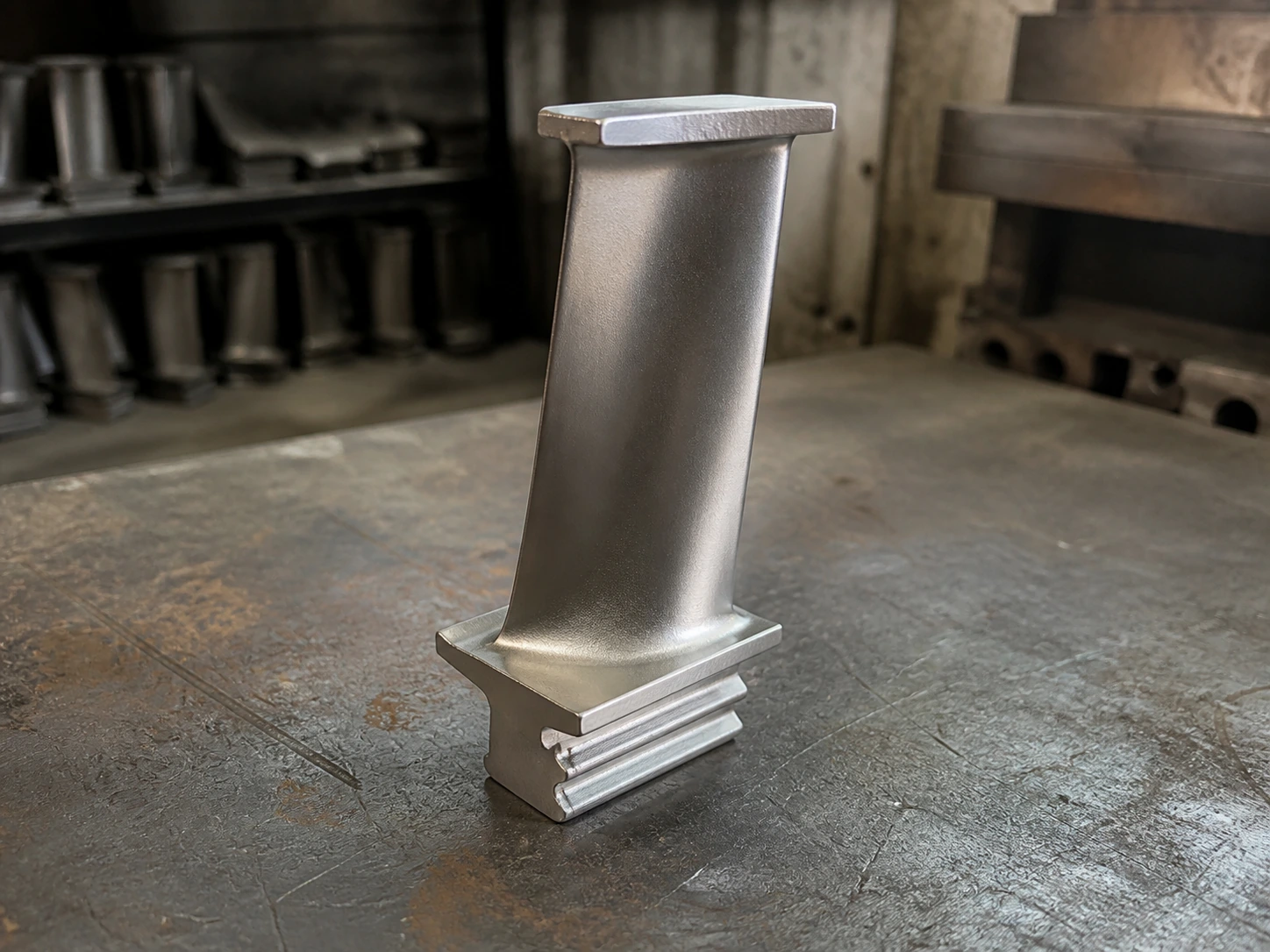
Energy & Turbine Castings
Turbine blades, nozzle rings, burner and compressor components in heat-resistant HK/HP grades and nickel superalloys for high-temperature duty.
Browse the family →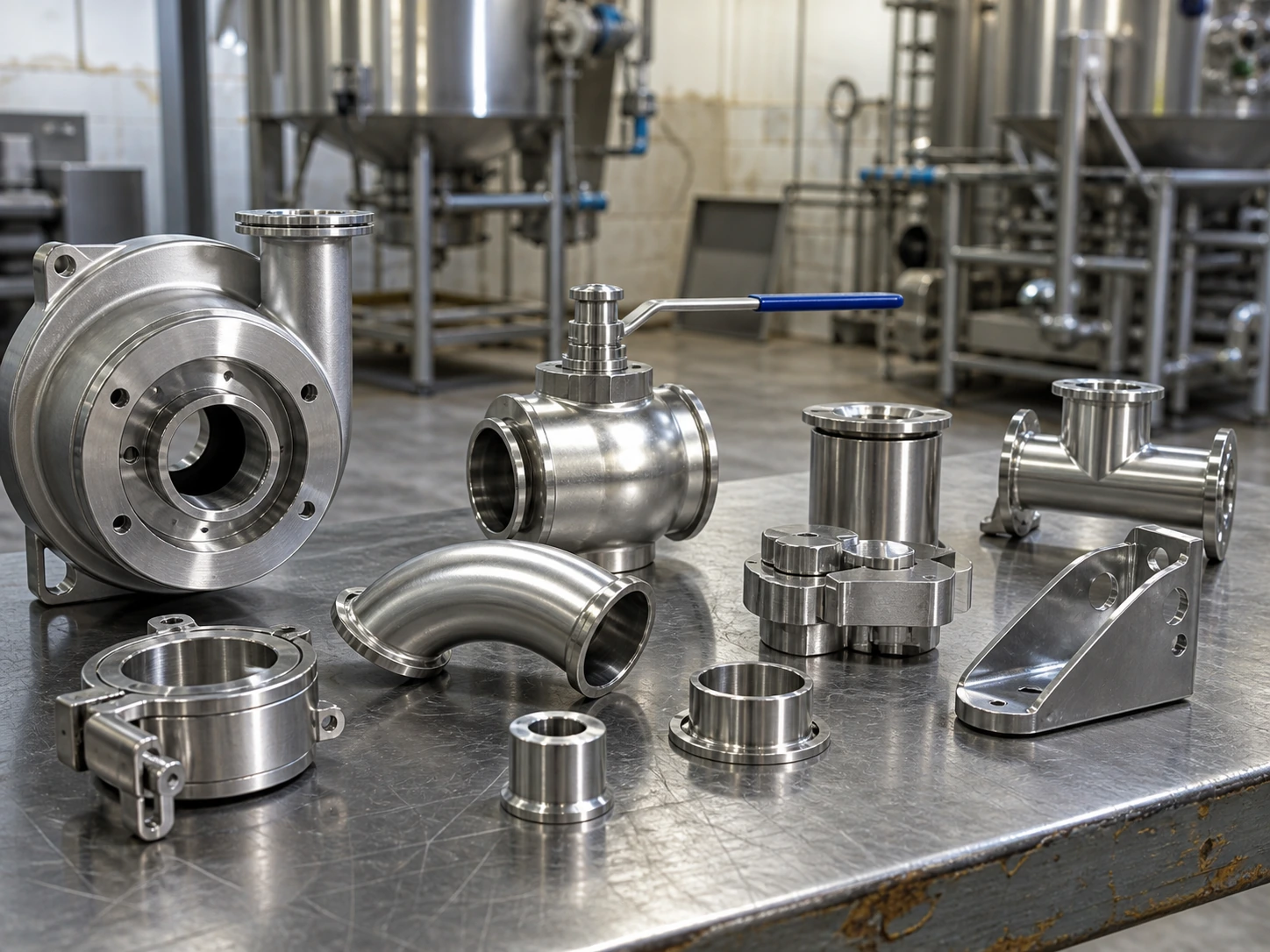
Food, Dairy & Medical Castings
Sanitary fittings, food machinery parts and surgical or orthopedic components in CF3M and CoCr, finished to hygienic surface…
Browse the family →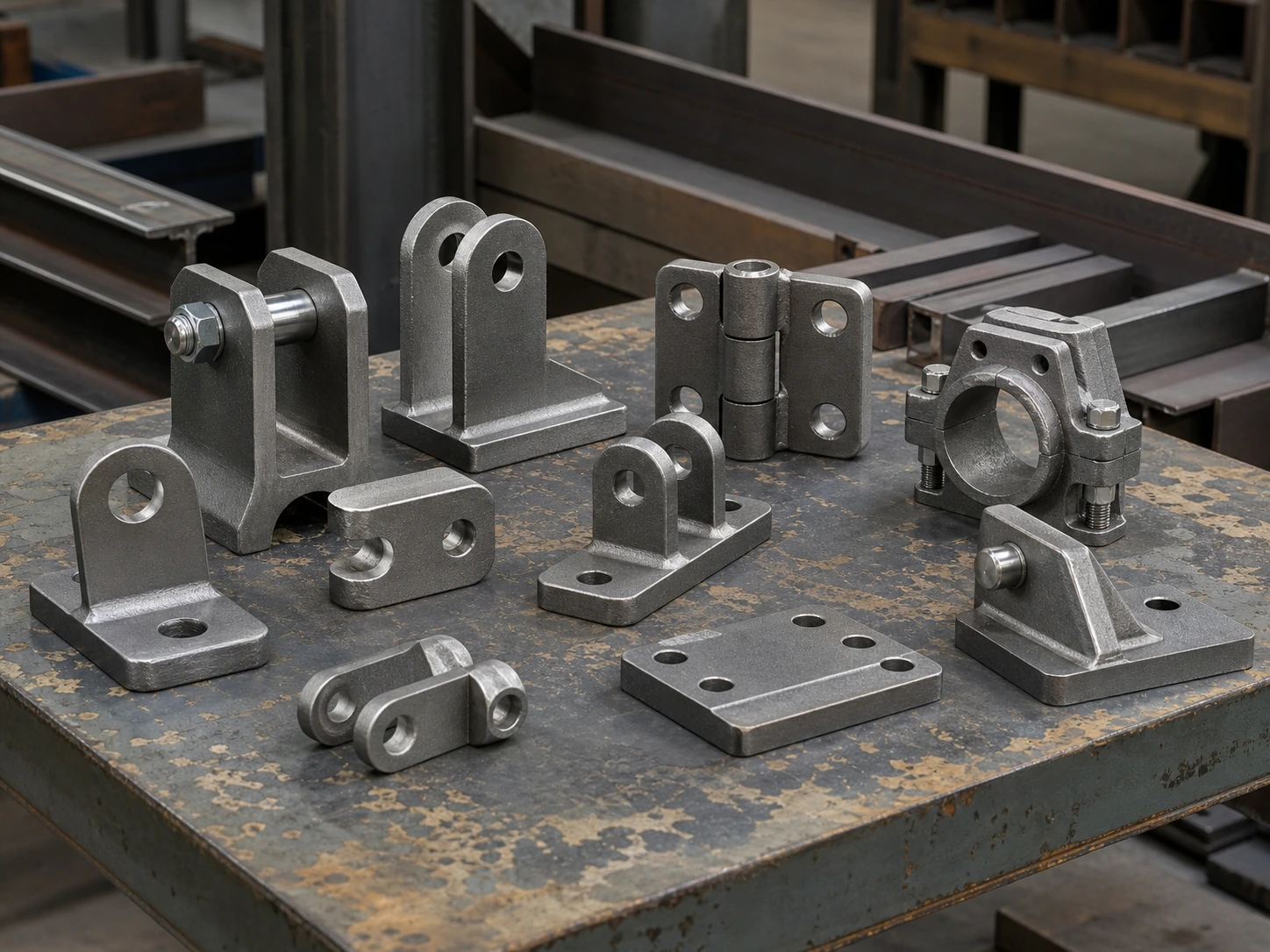
Architectural & Hardware Castings
Door and lock hardware, furniture fittings and decorative castings in stainless and brass where surface finish is part…
Browse the family →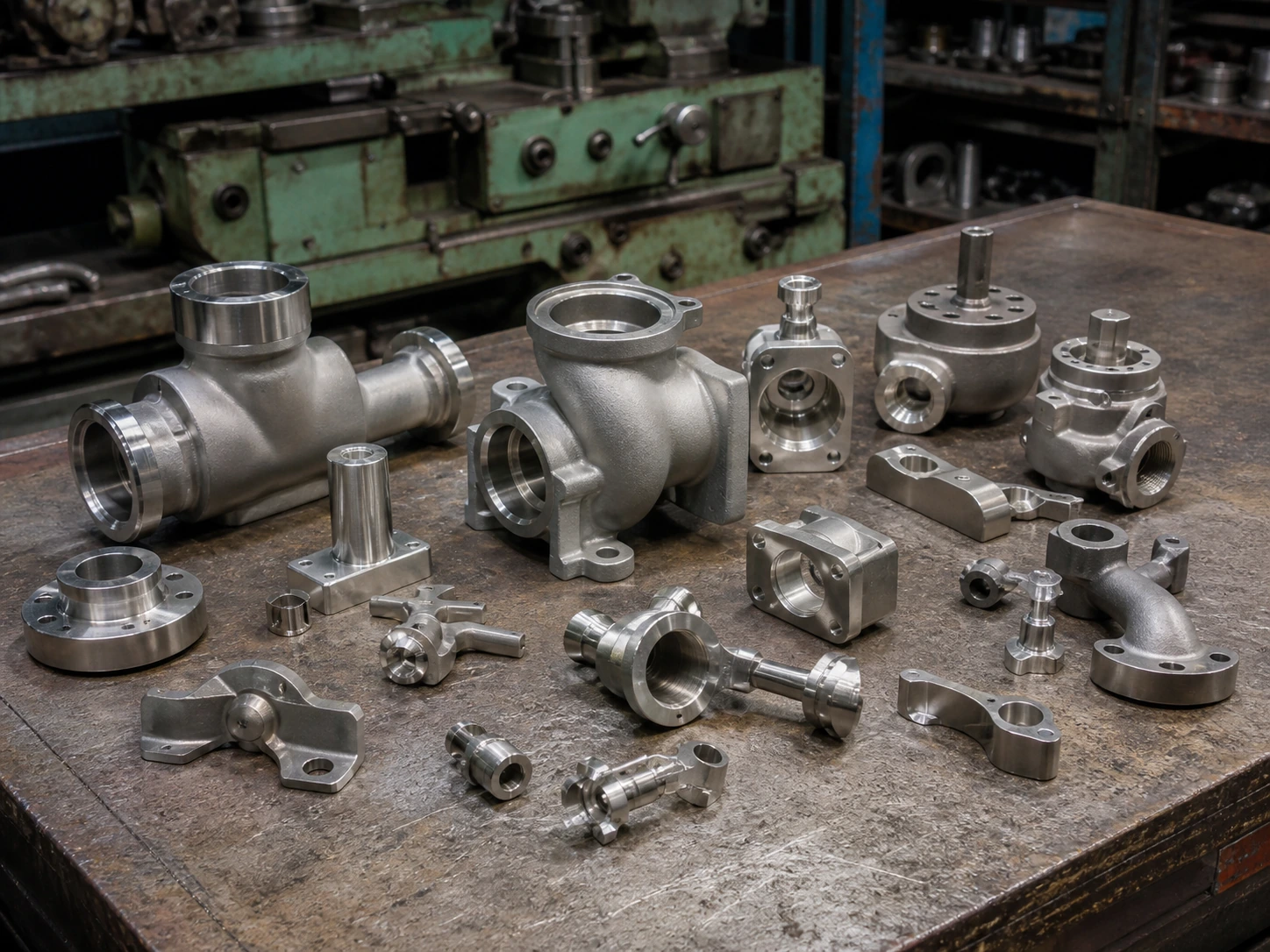
Custom & Made-to-Drawing Castings
Prototype, thin-wall and complex precision castings produced from your drawing or 3D model when the part fits no…
Browse the family →Why Lost Wax Casting
An investment casting foundry built around engineering data and fast, accurate quotations.

Near-net shape
Thin walls, cored passages and cast blade profiles that a machined or fabricated part cannot hold — ISO 8062-3 DCTG 5-8 as cast, at Ra 3.2-6.3 µm.
63 cast alloys
CF8M, CF3M, CA6NM, duplex and super duplex, WCB and low-alloy steel, HK/HP heat-resistant grades, Inconel and Hastelloy, nickel aluminum bronze, aluminum and titanium.
Fast quotations
Configure the drawing on any product page, or send a STEP file. Price, lead time and a castability review inside one business day.
Materials & grades we cast in
63 cast grades across six families — stainless, carbon and low-alloy steel, nickel and cobalt alloys, copper alloys, aluminium and titanium. Each designation is listed with its ASTM/UNS, EN and GB equivalents. Open the list to browse by family.
Browse all 63 cast grades we work instainless · carbon & low-alloy · nickel & cobalt · copper · aluminium · titanium

Austenitic Cast Stainless Steel
- CF8 ASTM A351 CF8 · UNS J92600 · AISI 304 cast · EN 1.4308
- CF3 ASTM A351 CF3 · UNS J92500 · AISI 304L cast · EN 1.4309
- CF8M ASTM A351 CF8M · UNS J92900 · AISI 316 cast · EN 1.4408
- CF3M ASTM A351 CF3M · UNS J92800 · AISI 316L cast · EN 1.4409
- CF8C ASTM A351 CF8C · UNS J92710 · AISI 347 cast · EN 1.4552
- CG8M ASTM A351 CG8M · UNS J93000 · AISI 317 cast
- CN7M ASTM A351 CN7M · UNS N08007 · Alloy 20 cast · Carpenter 20
- CK3MCuN ASTM A351 CK3MCuN · UNS J93254 · 254 SMO cast · EN 1.4547
- CN3MN ASTM A351 CN3MN · UNS J94651 · AL-6XN cast
Martensitic Cast Stainless Steel
- CA15 ASTM A743 CA15 · UNS J91150 · AISI 410 cast · EN 1.4008
- CA40 ASTM A743 CA40 · UNS J91153 · AISI 420 cast · EN 1.4034
- CA6NM ASTM A743 CA6NM · UNS J91540 · EN 1.4313 · GX4CrNi13-4
- CA15M ASTM A743 CA15M · UNS J91151
- CA6N ASTM A743 CA6N · UNS J91650
Precipitation-Hardening Cast Stainless Steel
- CB7Cu-1 (17-4 PH) ASTM A747 CB7Cu-1 · UNS J92180 · 17-4 PH cast · AISI 630
- CB7Cu-2 (15-5 PH) ASTM A747 CB7Cu-2 · UNS J92110 · 15-5 PH cast

Duplex & Super Duplex Cast Stainless Steel
- CD3MN (2205) ASTM A890 Gr 4A · UNS J92205 · Duplex 2205 cast · EN 1.4470
- CE3MN (2507) ASTM A890 Gr 5A · UNS J93404 · Super Duplex 2507 cast · EN 1.4469
- CD4MCu ASTM A890 Gr 1A · UNS J93370
- CD3MWCuN (Zeron 100) ASTM A890 Gr 6A · UNS J93380 · Zeron 100 cast
Heat-Resistant Cast Stainless Steel
- HK30 ASTM A297 HK30 · UNS J94203 · GX40CrNiSi25-12
- HK40 ASTM A297 HK40 · UNS J94204 · EN 1.4848
- HH ASTM A297 HH · UNS J93503 · EN 1.4837 cast
- HT ASTM A297 HT · UNS J94605
- HP ASTM A297 HP · UNS J95705 · GX40NiCrSi35-25
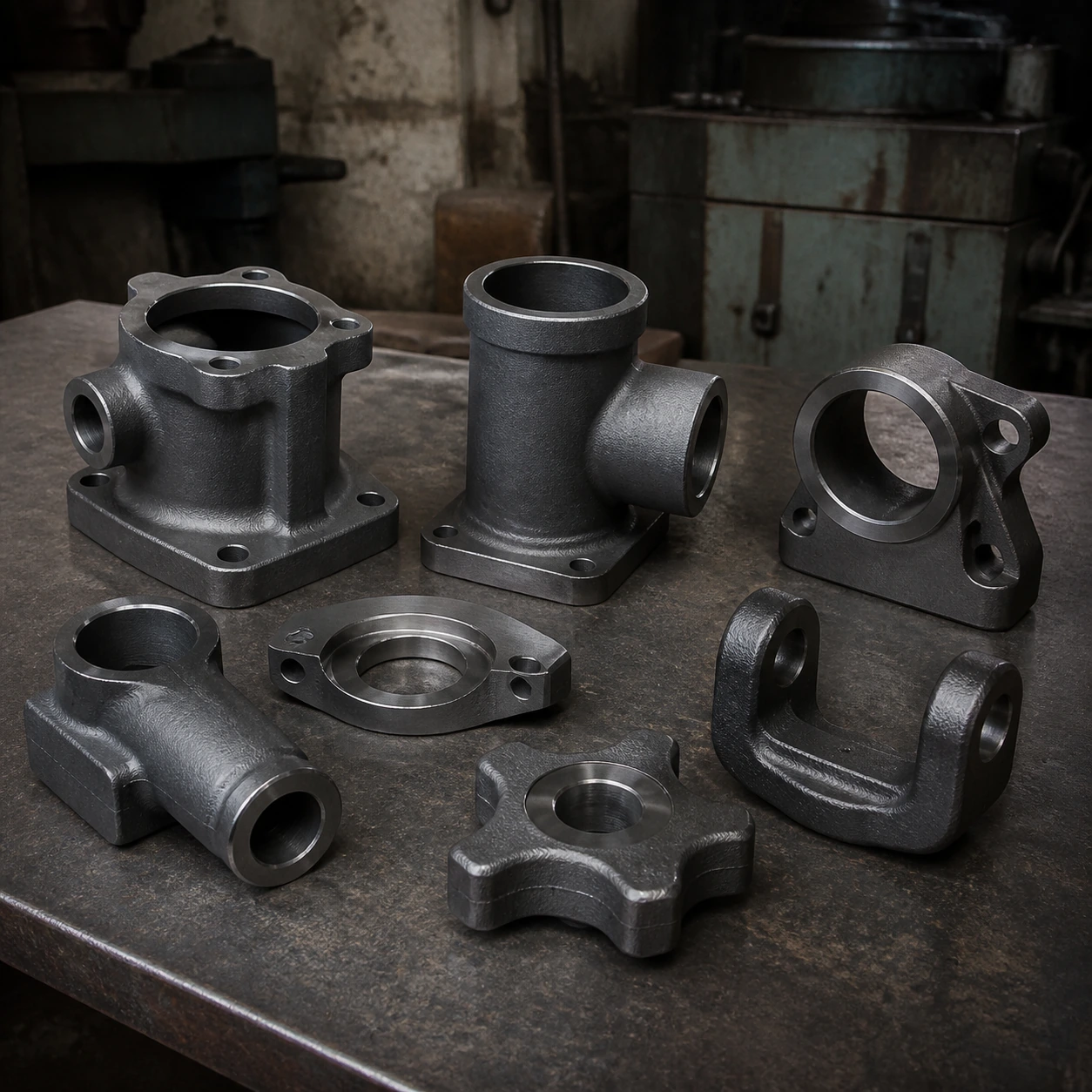
Carbon Steel Castings
- WCB ASTM A216 WCB · UNS J03002 · GP240GH · EN 1.0619
- WCC ASTM A216 WCC · UNS J02503
- WCA ASTM A216 WCA · UNS J02502
- LCB ASTM A352 LCB · UNS J03003
- LCC ASTM A352 LCC · UNS J02505
- AISI 1045 Cast ASTM A732 Gr 1045 · UNS G10450 · C45 · 45#

Low-Alloy Steel Castings
- AISI 4140 Cast ASTM A732 Gr 4140 · UNS G41400 · 42CrMo4 · EN 1.7225
- AISI 8620 Cast ASTM A732 Gr 8620 · UNS G86200 · 20CrNiMo
- WC6 ASTM A217 WC6 · UNS J12072 · 1.25Cr-0.5Mo · G17CrMo5-5
- WC9 ASTM A217 WC9 · UNS J21890 · 2.25Cr-1Mo · G17CrMo9-10
- C5 ASTM A217 C5 · UNS J42045 · 5Cr-0.5Mo
- C12A ASTM A217 C12A · UNS J84090 · Grade 91 · 9Cr-1Mo-V
- AISI 4340 Cast ASTM A732 Gr 4340 · UNS G43400 · 40CrNiMoA
Nickel-Base Alloy Castings
- Inconel 625 (CW6MC) ASTM A494 CW6MC · UNS N26625 · Inconel 625 · Alloy 625
- Inconel 718 AMS 5383 · UNS N07718 · Alloy 718 · GH4169
- Inconel 713C AMS 5391 · UNS N07713 · Alloy 713C
- Hastelloy C (CW6M) ASTM A494 CW6M · UNS N30107 · Hastelloy C cast
- Hastelloy C-276 (CW12MW) ASTM A494 CW12MW · UNS N30002 · Alloy C-276 cast
- Monel M-35-1 ASTM A494 M35-1 · UNS N24135 · Monel 400 cast
Cobalt-Base Alloy Castings
- CoCrMo (ASTM F75) ASTM F75 · UNS R30075 · CoCr28Mo6
- Stellite 6 UNS R30006 · CoCr-A · Alloy 6
- Stellite 12 UNS R30012 · Alloy 12
- X-40 (Co-Cr-W) AMS 5382 · UNS R30031 · Haynes 31
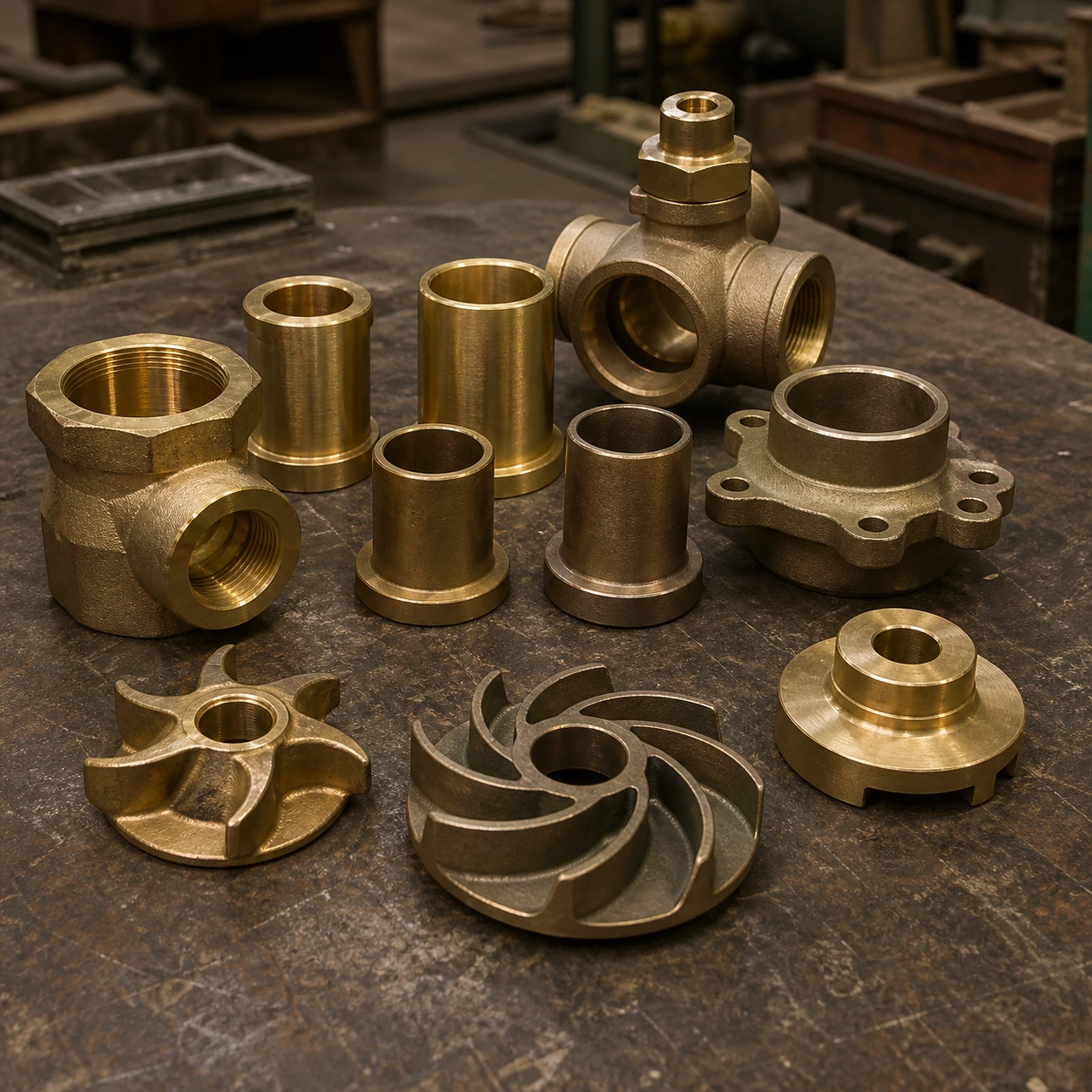
Bronze Castings
- C95800 Nickel Aluminum Bronze ASTM B148 C95800 · UNS C95800 · NAB · CuAl10Fe5Ni5
- C95500 Nickel Aluminum Bronze ASTM B148 C95500 · UNS C95500
- C90300 Tin Bronze ASTM B584 C90300 · UNS C90300 · 88-8-0-4
- C93200 Bearing Bronze ASTM B584 C93200 · UNS C93200 · SAE 660
Brass Castings
- C83600 Red Brass ASTM B584 C83600 · UNS C83600 · 85-5-5-5
- C87600 Silicon Brass ASTM B584 C87600 · UNS C87600
- C86300 Manganese Bronze ASTM B584 C86300 · UNS C86300
Aluminum Alloy Castings
- A356 / A356-T6 ASTM B26 A356 · UNS A13560 · AlSi7Mg0.3 · EN AC-42000
- A357 ASTM B26 A357 · UNS A13570 · AlSi7Mg0.6
- 355 / C355 ASTM B26 355 · UNS A03550 · AlSi5Cu1Mg
- A201-T7 ASTM B26 A201 · UNS A02010 · AlCu4MgTi
Titanium Castings
- Ti-6Al-4V (Grade 5) ASTM B367 Gr C-5 · UNS R56400 · TC4 · Ti-6-4
- CP Titanium Grade 2 ASTM B367 Gr C-2 · UNS R50400
Special & Wear Alloys
- Ni-Resist D-2 ASTM A439 D-2 · UNS F43000
- High-Chrome White Iron ASTM A532 Class III · 25Cr white iron
How your castings are made
Every part we ship moves through the same eight stages, in our own plant. The controls listed under each stage are the ones that decide whether a casting meets its class — not marketing copy.
-

01 Tooling & wax injection
An aluminum die is cut from your drawing or 3D model, and wax is injected into it under pressure. Everything downstream is a copy of this pattern, so the die is where the tolerance is actually decided — not on the shop floor afterwards.
First-article dimensional report on every new die before production wax is run.
-

02 Tree assembly & gating
Patterns are welded onto a wax runner to form a tree. How they are gated is not cosmetic: the gate positions decide which sections solidify last, and a heavy section fed from the wrong direction is where shrinkage porosity comes from.
Gating reviewed against the part's heaviest section before the first tree is built.
-
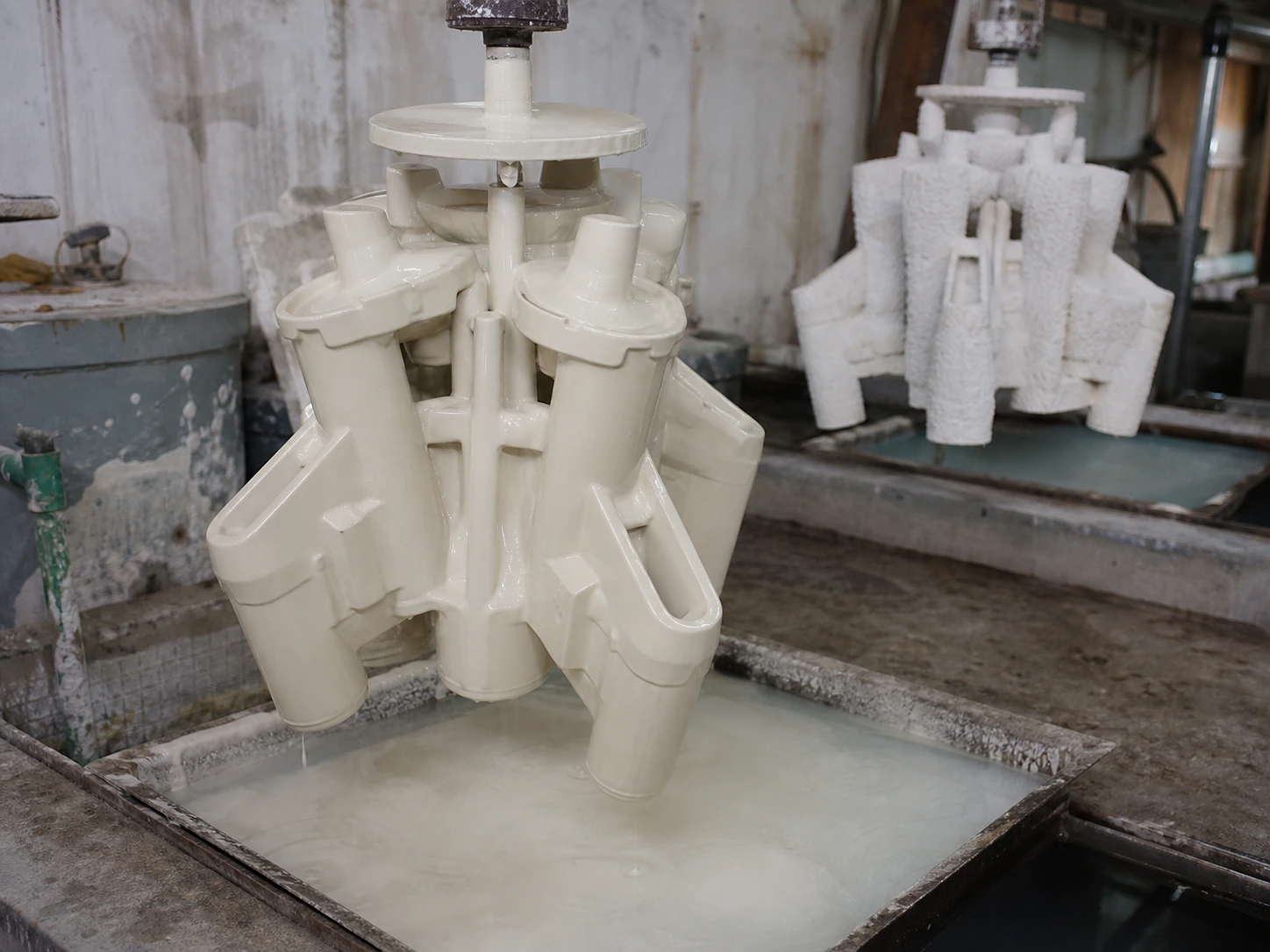
03 Ceramic shell building
The tree is dipped in ceramic slurry and stuccoed with refractory grain, six to eight times, drying between coats. The face coat is what the casting surface copies, which is why a silica sol face gives Ra 3.2-6.3 µm where a water-glass shell gives a coarser one.
Slurry viscosity and drying room temperature and humidity logged per coat.
-
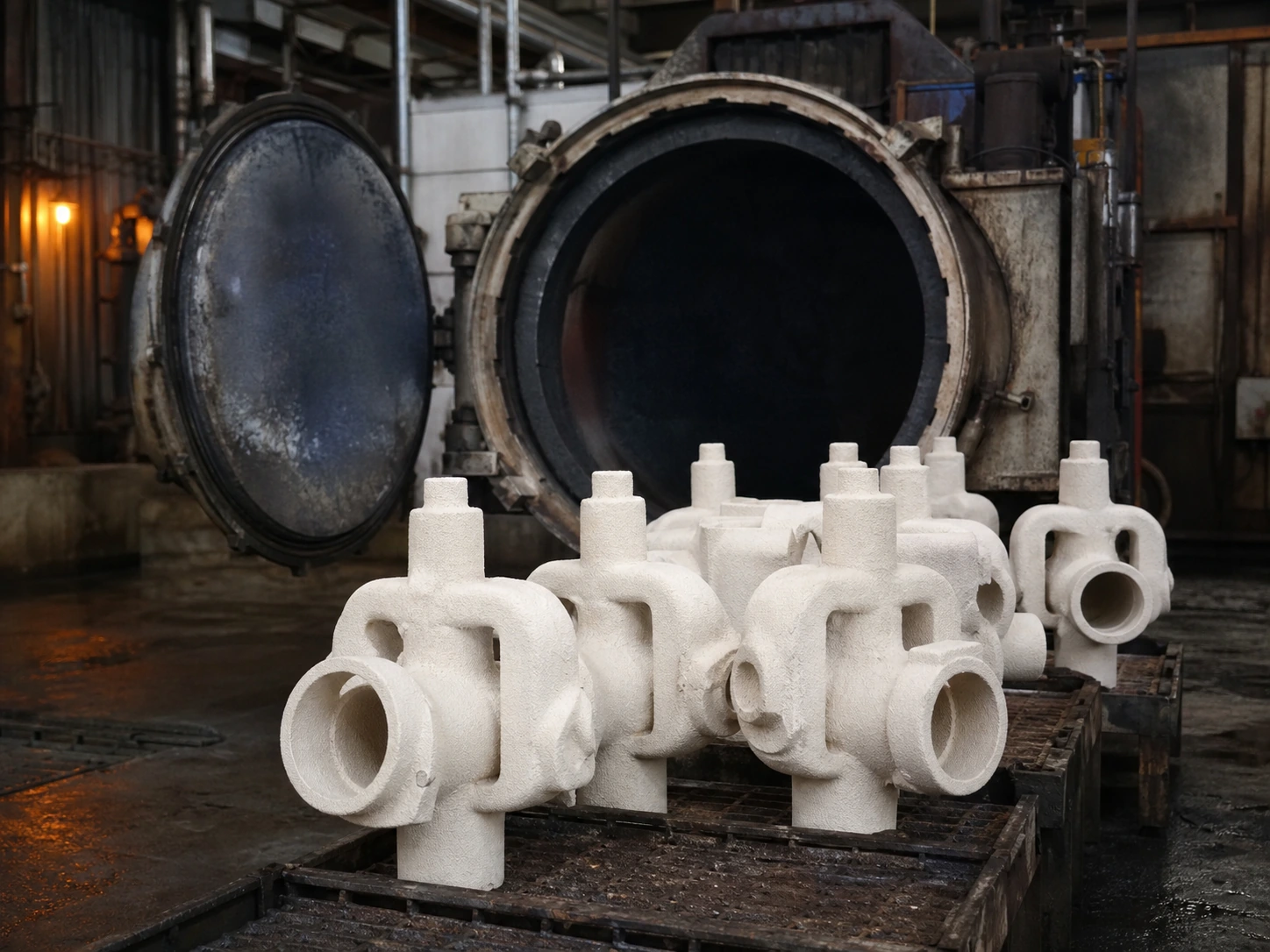
04 Dewaxing
A steam autoclave melts the wax out fast, so that the wax — which expands more than the ceramic does — leaves before it can split the shell. Recovered wax is filtered and reused for gating rather than for patterns.
Every shell inspected for cracks after dewax; a cracked shell is scrapped, not patched.
-
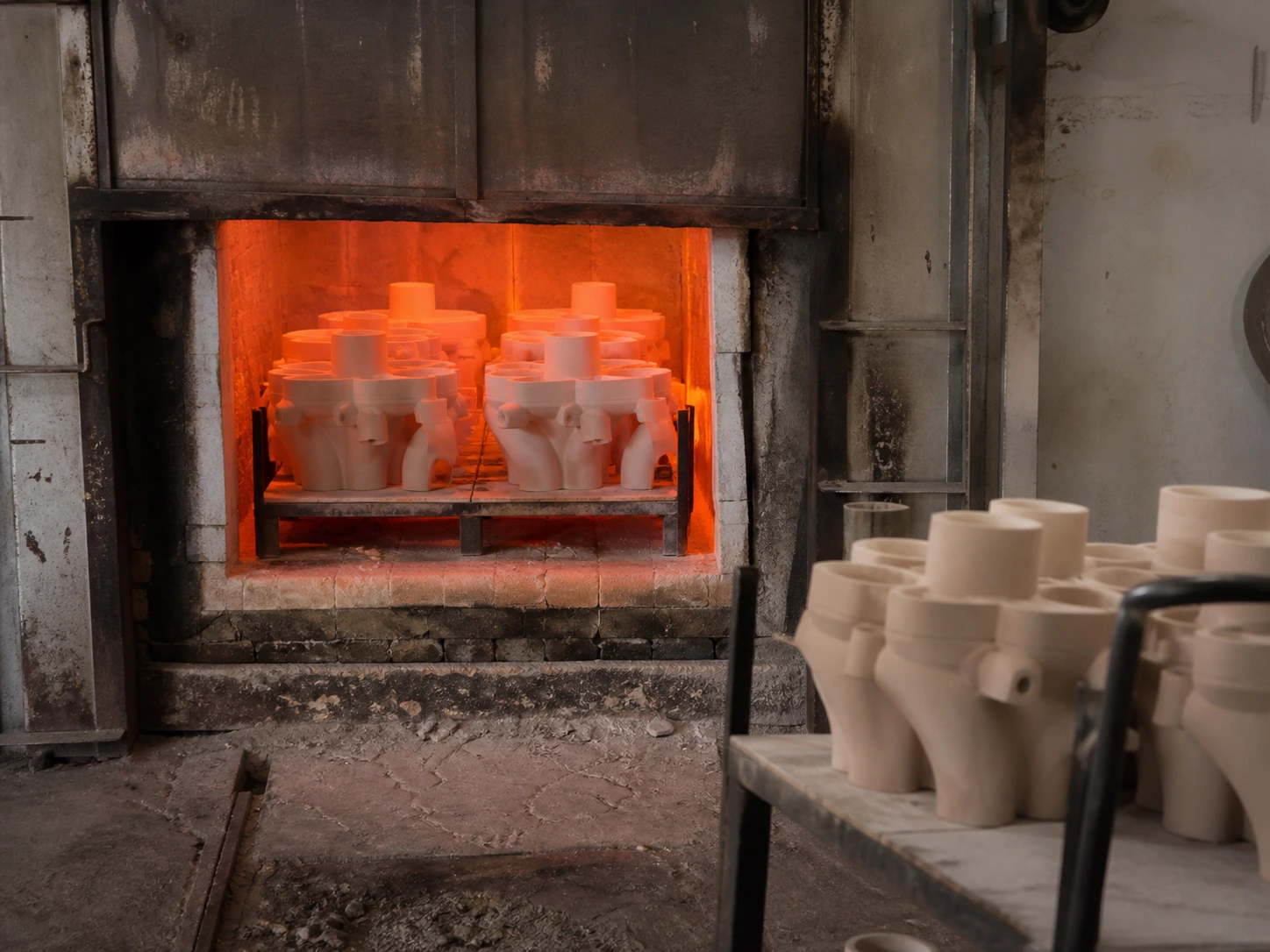
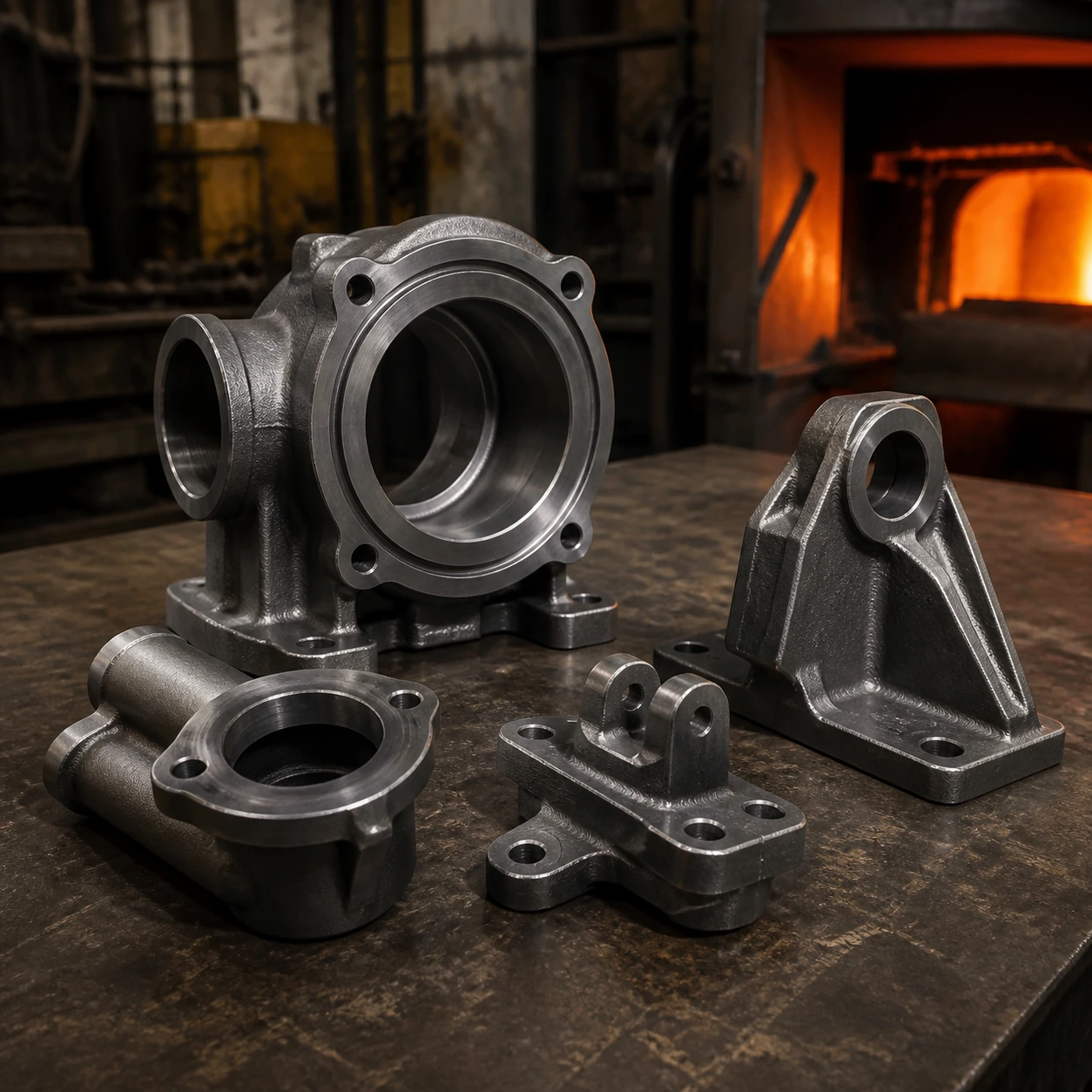
05 Shell firing
The empty shell is fired to roughly 1000 °C. Firing burns out wax residue, develops the shell's strength, and preheats the mould so that thin sections fill instead of freezing short of the far end.
Furnace profile recorded per load; shells are poured hot rather than allowed to cool and be reheated.
-
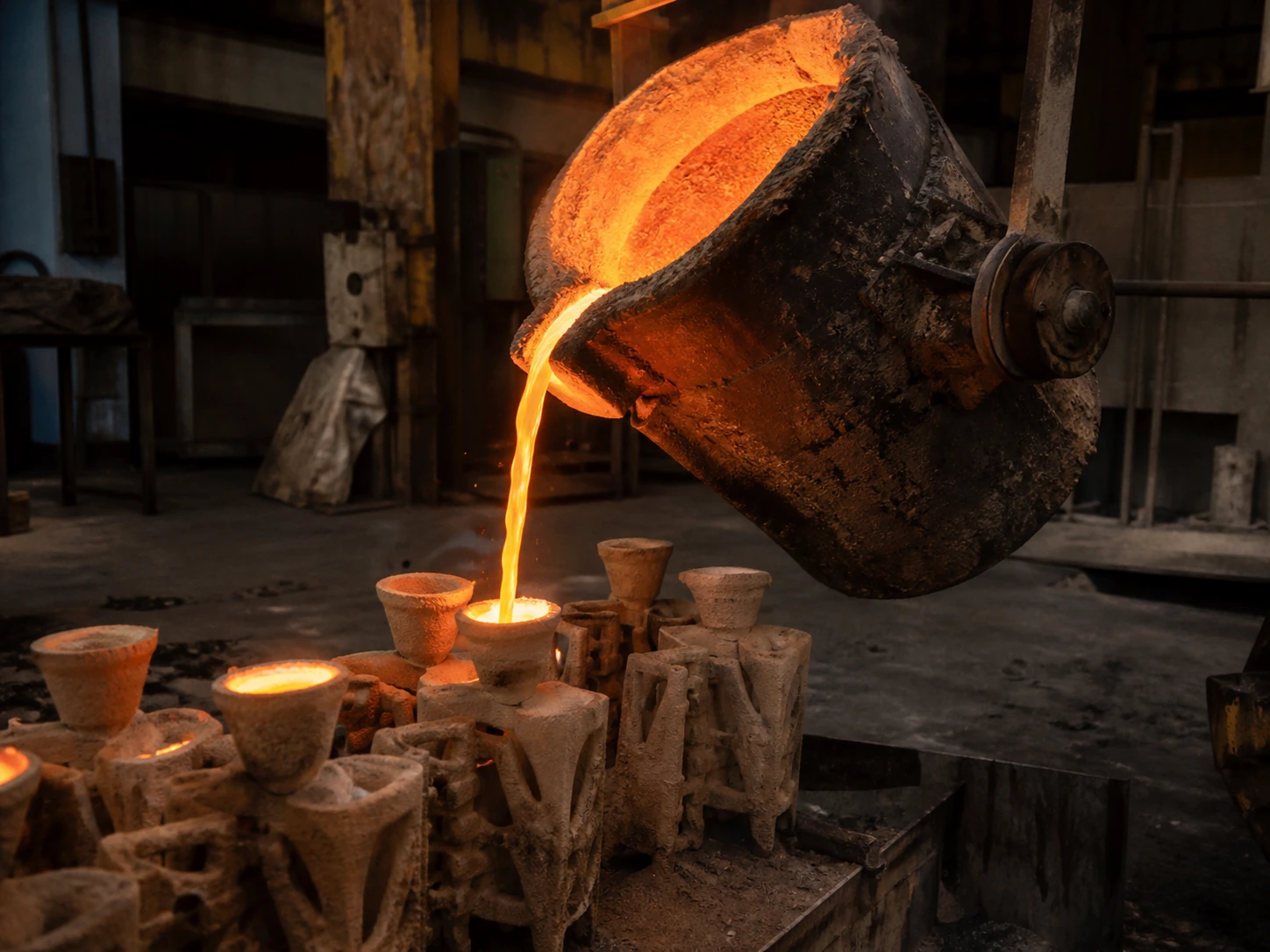
06 Melting & pouring
The charge is induction melted and the composition confirmed on the spectrometer before it is tapped. Reactive and high-nickel grades are melted and poured under vacuum, because poured in air they gas and oxidize, and the inclusions that result are what shortens creep life at temperature.
Spectrometer analysis on every heat, certified against the ordered grade.
-

07 Knock-out, cut-off & finishing
Shell is knocked off, parts are cut from the runner, and gate stubs are ground flush. Heat treatment and blasting follow, in that order — grinding a part after solution treatment puts work back into a surface the treatment was meant to relieve.
Heat treatment to the grade's specification, with furnace charts retained against the heat number.
-

08 Machining & final inspection
Where the drawing calls for machined faces, they are cut from the datums the drawing specifies, not from whichever surface is convenient. Finished parts are then measured against the drawing rather than against the pattern.
Dimensional inspection to the drawing, plus hydrostatic, radiographic, dye-penetrant or balance testing as the order specifies.
Free Engineering Calculators
Bench-side tools for casting work — pour weight, shrinkage allowance, ISO 8062-3 machining allowance and tolerance, minimum wall thickness, alloy density and unit conversion. Open any tool below.
Pour Weight
Part volume × alloy density → casting weight, plus gates and risers.
Shrinkage Allowance
Pattern size from finished size, by alloy solidification shrinkage.
Machining Allowance
Stock to add per face, by casting size and tolerance grade.
Minimum Wall Thickness
Smallest section this shell will fill, by alloy and flow length.
ISO 8062-3 Tolerance
Tolerance band for a dimension at a given DCTG grade.
Alloy Density
Density and typical mechanical properties for 63 cast grades.
Metric ↔ Imperial
Length, mass, force and pressure converter.
About Lost Wax Casting
An investment casting foundry — built around accurate engineering data and fast, honest quotations.
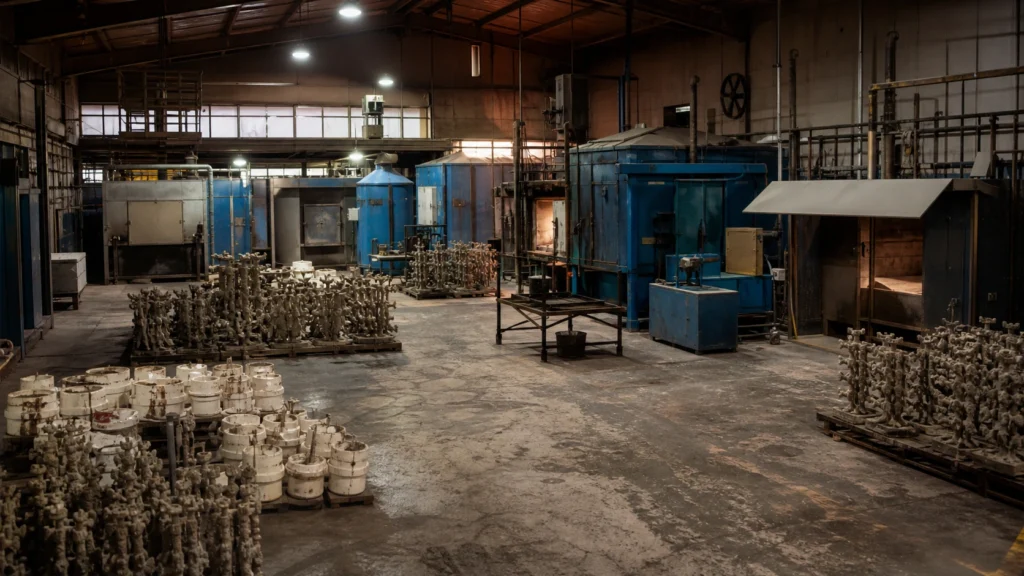
We produce valve and pump castings, impellers and rotating parts, brackets and levers, pipe fittings, housings and made-to-drawing precision castings by the lost wax process. Every product page carries the full parameter table, a technical drawing that redraws to whichever size you select, the alloys the part is legitimately supplied in, and a single-click path to a quotation — so the engineer specifying the part finds what they need without leaving the page.
Our team responds within one business day. A quotation states the alloy, the tolerance grade, the machining scope, the surface finish, the tooling charge and the lead time — the figures that actually decide whether a casting is the right answer, rather than a unit price with the conditions left out.
Contact Us
Send a quote request from any product page, or reach the team directly.
Hours
Monday – Friday
9:00 – 18:00 your local time
Quote requests
Use the casting finder or any product page's quote form. Attaching a drawing or a STEP file is the fastest route to a firm price.