
Casting
Silica sol, water glass and composite ceramic shells, plus vacuum melting for reactive and high-nickel grades. Wax tooling cut in-house from your drawing or 3D model.
We manufacture and supply standard and made-to-order castings for equipment manufacturers, engineering companies, distributors and industrial projects worldwide.

Our foundry produces investment castings by the lost wax process: valve and pump castings, impellers and rotating parts, brackets and levers, pipe fittings, housings and made-to-drawing precision parts. Production is organized around stable shell chemistry, controlled solidification and dependable heat-to-heat traceability.
Tooling, wax injection, tree assembly, shell building, dewaxing and firing, melting and pouring, cut-off, heat treatment, machining and inspection are coordinated to meet the requirements of each drawing, specification and service condition. Catalog parts and made-to-drawing castings are supplied from roughly 0.02 to 80 kg, in 63 cast grades, at ISO 8062-3 DCTG 5-8 as cast.
Silica sol, water glass and composite ceramic shells, plus vacuum melting for reactive and high-nickel grades. Wax tooling cut in-house from your drawing or 3D model.
CF8M, CF3M and CA6NM, duplex and super duplex, WCB and low-alloy steel, HK/HP heat-resistant grades, Inconel and Hastelloy, nickel aluminum bronze, aluminum and titanium — chosen against the service, not the price list.
Solution annealing, normalizing, quench-and-temper and age hardening, then CNC machining of the faces the drawing calls out. Surfaces not called out are supplied as-cast.
Spectrometer analysis on every heat, dimensional inspection against the drawing, and hydrostatic, radiographic, dye-penetrant, hardness or dynamic-balance testing as the order specifies.
Every part we ship moves through the same eight stages, in our own plant. The controls listed under each stage are the ones that decide whether a casting meets its class — not marketing copy.

An aluminum die is cut from your drawing or 3D model, and wax is injected into it under pressure. Everything downstream is a copy of this pattern, so the die is where the tolerance is actually decided — not on the shop floor afterwards.
First-article dimensional report on every new die before production wax is run.

Patterns are welded onto a wax runner to form a tree. How they are gated is not cosmetic: the gate positions decide which sections solidify last, and a heavy section fed from the wrong direction is where shrinkage porosity comes from.
Gating reviewed against the part's heaviest section before the first tree is built.
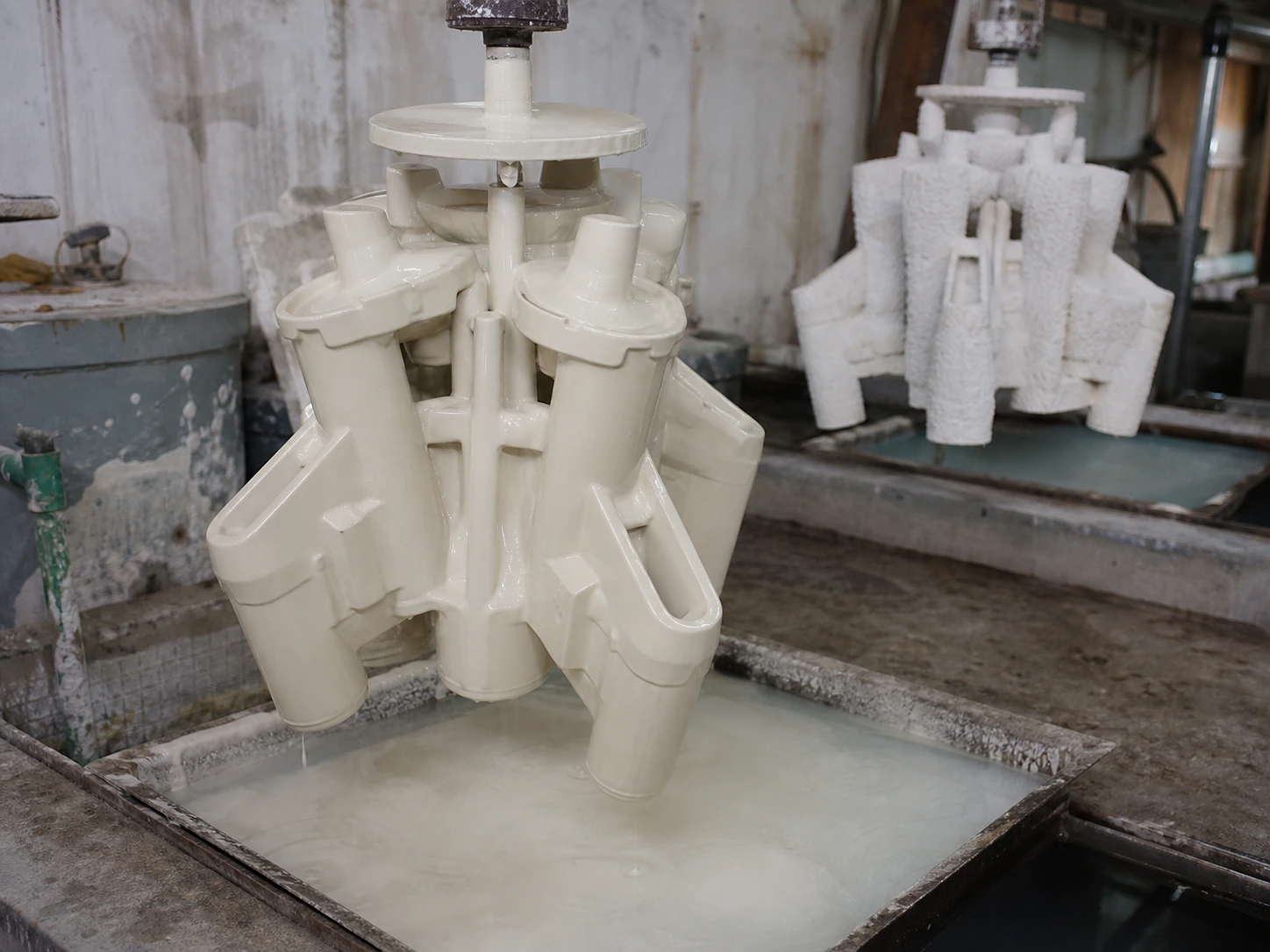
The tree is dipped in ceramic slurry and stuccoed with refractory grain, six to eight times, drying between coats. The face coat is what the casting surface copies, which is why a silica sol face gives Ra 3.2-6.3 µm where a water-glass shell gives a coarser one.
Slurry viscosity and drying room temperature and humidity logged per coat.
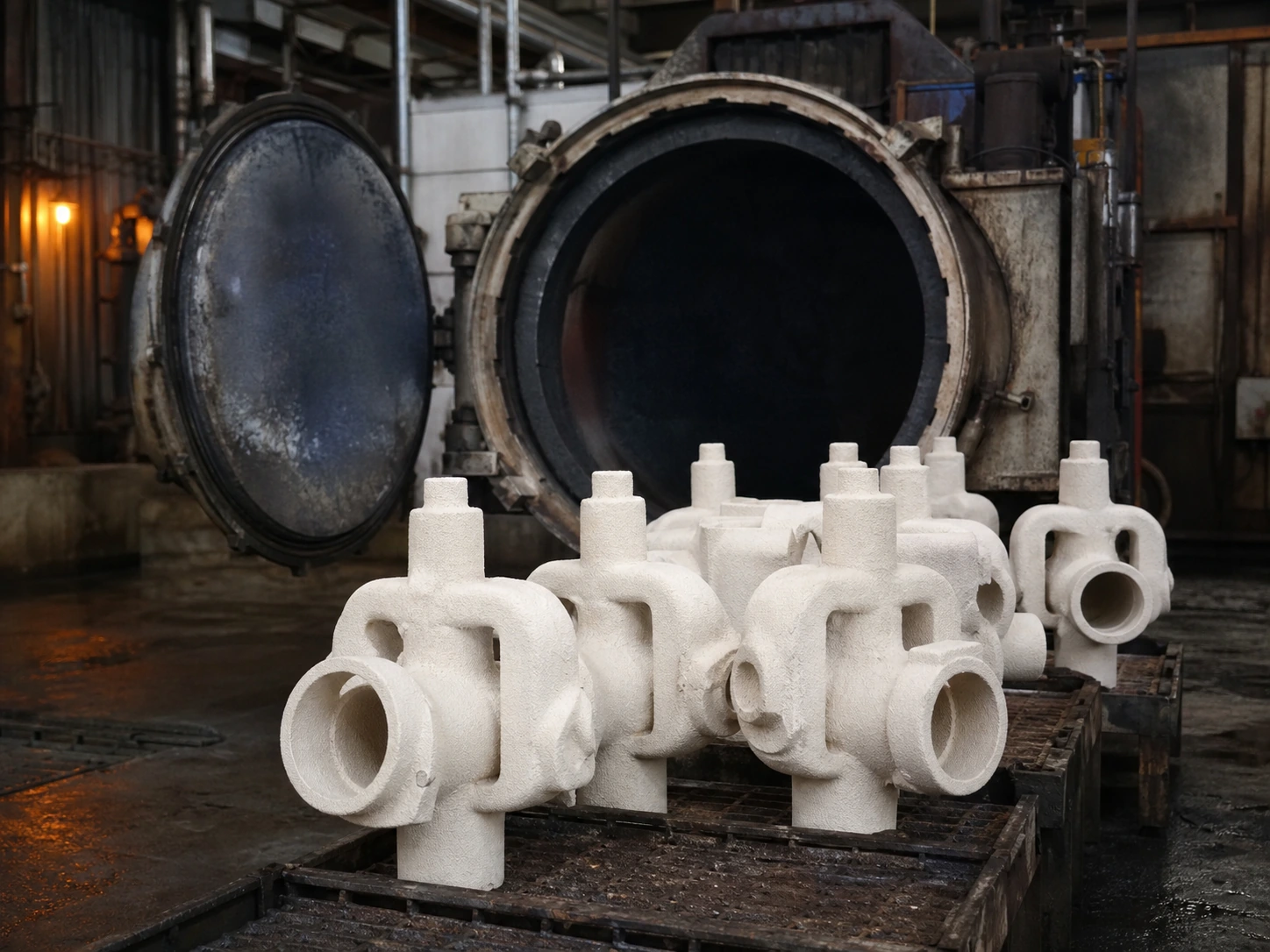
A steam autoclave melts the wax out fast, so that the wax — which expands more than the ceramic does — leaves before it can split the shell. Recovered wax is filtered and reused for gating rather than for patterns.
Every shell inspected for cracks after dewax; a cracked shell is scrapped, not patched.
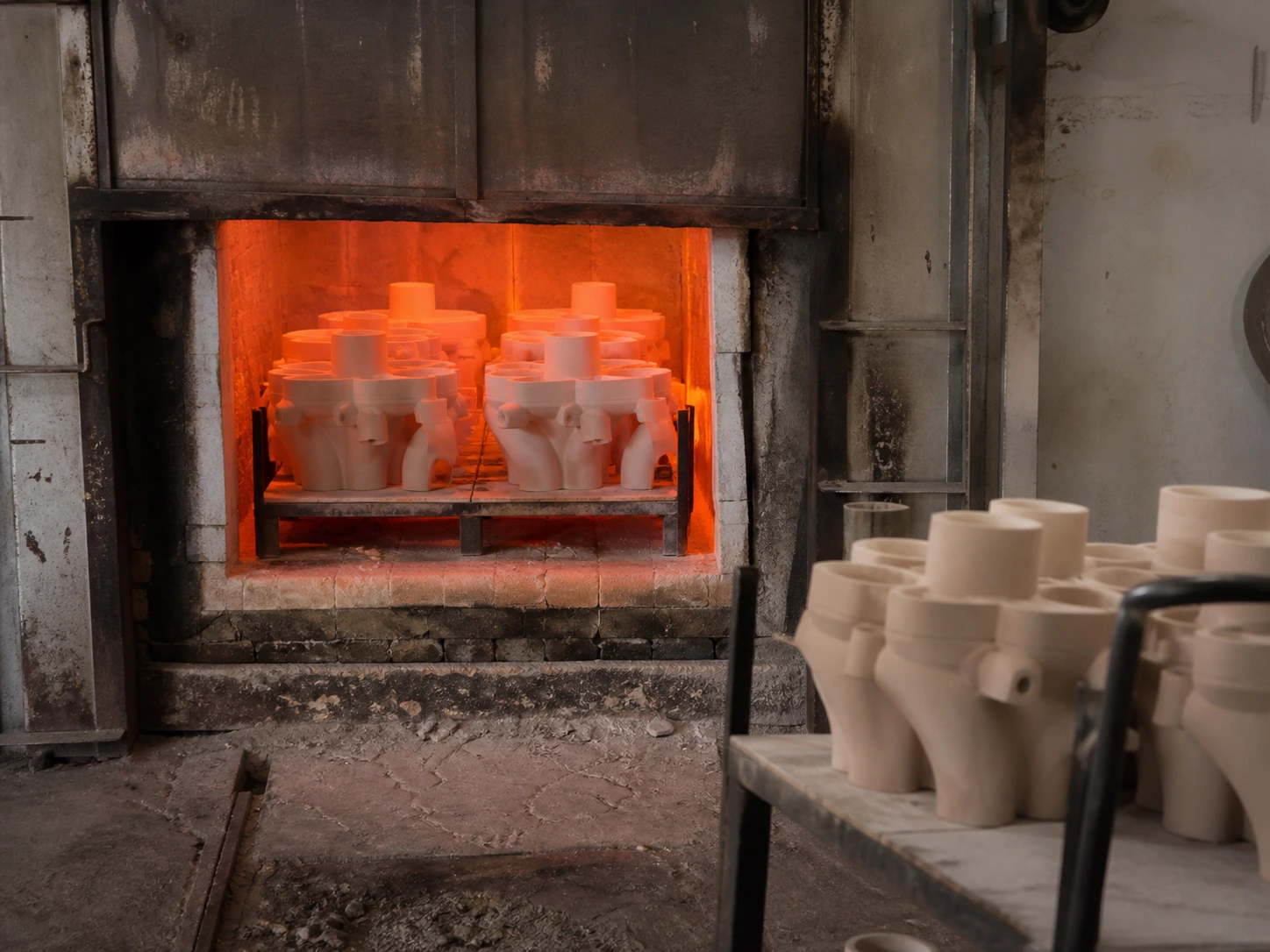
The empty shell is fired to roughly 1000 °C. Firing burns out wax residue, develops the shell's strength, and preheats the mould so that thin sections fill instead of freezing short of the far end.
Furnace profile recorded per load; shells are poured hot rather than allowed to cool and be reheated.
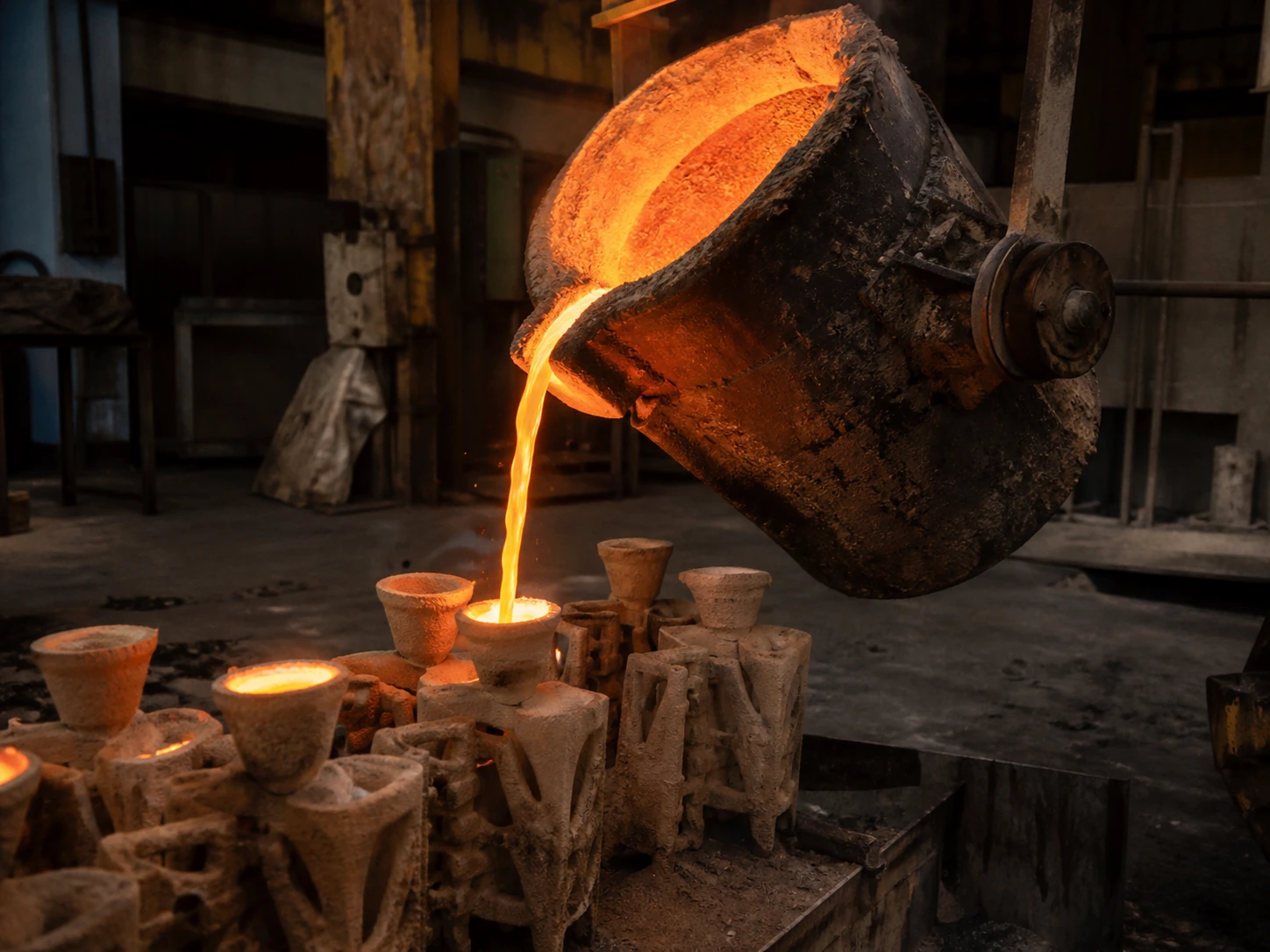
The charge is induction melted and the composition confirmed on the spectrometer before it is tapped. Reactive and high-nickel grades are melted and poured under vacuum, because poured in air they gas and oxidize, and the inclusions that result are what shortens creep life at temperature.
Spectrometer analysis on every heat, certified against the ordered grade.

Shell is knocked off, parts are cut from the runner, and gate stubs are ground flush. Heat treatment and blasting follow, in that order — grinding a part after solution treatment puts work back into a surface the treatment was meant to relieve.
Heat treatment to the grade's specification, with furnace charts retained against the heat number.

Where the drawing calls for machined faces, they are cut from the datums the drawing specifies, not from whichever surface is convenient. Finished parts are then measured against the drawing rather than against the pattern.
Dimensional inspection to the drawing, plus hydrostatic, radiographic, dye-penetrant or balance testing as the order specifies.
We cast to ASTM, ASME, API, EN and ISO specifications, and to customer drawings where no standard applies. When a catalog part does not fit the application, our engineering team reviews the drawing, the 3D model and the service conditions, and comes back with a castability assessment before any tooling is cut.
Material grade, property class, dimensions, tolerances, finish, marking, testing, packaging and documentation can be confirmed before production.

Share the standard number, drawing, material, finish, quantity and delivery requirements. Our team will review the details and prepare a quotation.