
Pillow Block Housing — Applications & Selection
8 catalogued sizes by nominal bore, 9 cast alloys, to ASTM A216 WCB / ISO 113.
The Pillow Block Housing is a housing casting produced by investment casting. The reason it is cast rather than machined is the internal cavity: the passage is formed by a core inside the wax pattern, so the wall thickness holds around a curve no drill can follow. The catalogued range runs 0.85 to 6.44 kg as cast across 8 sizes.
- Specification
- ASTM A216 WCB / ISO 113
- Selected by
- Nominal bore
- Casting weight
- 0.85 – 6.44 kg
- Alloys
- WCB, CF8M, CF3M
- Tolerance as cast
- ISO 8062-3 DCTG 6 – 8

Where the Pillow Block Housing Is Used
- General Machinery
- Supplied to machine builders and industrial equipment OEMs, where the governing consideration is getting a complex shape at a sensible cost, with the machining confined to the faces that matter.
- Automotive & Transport
- Supplied to vehicle, commercial-vehicle and rail equipment manufacturers, where the governing consideration is volume, repeatability and a dimensional record that survives a PPAP submission.
- Power Generation
- Supplied to turbine, boiler and balance-of-plant equipment builders, where the governing consideration is sustained temperature, thermal cycling and creep over a design life measured in decades.
How to Specify a Pillow Block Housing
In the order each decision moves the price — which is not the order they usually arrive in.
- Alloy
- The single biggest driver of price and lead time. This part is cast in WCB, CF8M, CF3M, CF8, CF3 and CD3MN (2205). If your drawing names one, state it; if not, describe the service — the medium, the temperature and the pressure — and the grade follows from that rather than from a corrosion table read at ambient.
- Size and quantity
- Selected by nominal bore. Investment casting is tooled per part, so a size outside the table is a new pattern die rather than a stock item — and tooling is a one-time charge that amortizes over the run. Below roughly 50 pieces a year the tooling usually dominates, and it is worth saying so before you commit.
- Machining scope
- Name the faces that are machined and the ones that are not. A machining allowance of 1.5–3 mm is added only to the faces the drawing calls out; every other surface is supplied as cast. A tolerance nobody asked for is the most common avoidable cost on a casting.
- Tolerance grade
- ISO 8062-3 DCTG 6–8 as cast on a silica sol shell, widening with size. Anything tighter than the band is machined rather than cast, which is a cost line rather than a process setting.
Casting Design Notes
The comments that come back on a first castability review. Reading them here saves a round trip.
- Wall thickness
- Investment casting will hold a section down to about 1.5 mm in the silica sol shell used here, and 0.6 mm on a small isolated feature. The more common problem is the opposite: a section much heavier than the wall around it solidifies last and shrinks, so it is fed or cored rather than left solid. Uniform wall beats thin wall.
- Fillets and radii
- A cast fillet is a real feature, not a drafting convention. It is where the section changes fastest, and a sharp internal corner there is where a hot tear starts. Generous radii cost nothing in the pattern and remove a whole class of defect.
- Draft
- Wax is drawn from a metal die, so a small draft on the pattern faces makes the part manufacturable. On most geometry it is already implicit; on a deep straight-sided pocket it needs to be discussed.
- Cores
- The internal passage is a core, and a core has to be supported and then removed. A long blind passage of small diameter is the case that gets expensive, and a small change to the geometry often removes the problem entirely.
Where Investment Casting Is Not the Right Answer
Stated plainly, because a supplier that only argues for its own process is one you learn to discount.
- Very low volume
- Tooling is a one-time charge and it has to amortize. For a handful of pieces, machining from bar or a 3D-printed pattern is usually cheaper even at a higher unit price — and we will say so rather than quote tooling you will not recover.
- Simple heavy sections
- The advantage here is shape, not metal. A thick simple part with one machined face gets nothing from the better surface and the tighter tolerance, and sand casting will make it for less.
- Tolerances tighter than the band
- A dimension held tighter than ISO 8062-3 DCTG 6 is machined, not cast. If most dimensions on the drawing are in that territory, the part is a machined part with a cast blank — which is a legitimate answer, and a different quotation.
Alloys & Grades
The Pillow Block Housing is cast in 9 of the 63 grades we work in. Those are listed first; the full reference tree is underneath, with each designation shown alongside its ASTM/UNS, EN and GB equivalents.
- WCB catalog grade ASTM A216 WCB / UNS J03002
- CF8M ASTM A351 CF8M / UNS J92900 (cast 316)
- CF3M ASTM A351 CF3M / UNS J92800 (cast 316L)
- CF8 ASTM A351 CF8 / UNS J92600 (cast 304)
- CF3 ASTM A351 CF3 / UNS J92500 (cast 304L)
- CD3MN (2205) ASTM A890 Gr 4A / UNS J92205 (cast 2205 duplex)
- WCC ASTM A216 WCC / UNS J02503
- HK30 ASTM A297 HK30 / UNS J94203 (GX40CrNiSi25-12)
- A356 / A356-T6 ASTM B26 A356-T6 / AlSi7Mg0.3
Browse all 63 cast grades we work instainless · carbon & low-alloy · nickel & cobalt · copper · aluminium · titanium

Austenitic Cast Stainless Steel
- CF8 ASTM A351 CF8 · UNS J92600 · AISI 304 cast · EN 1.4308
- CF3 ASTM A351 CF3 · UNS J92500 · AISI 304L cast · EN 1.4309
- CF8M ASTM A351 CF8M · UNS J92900 · AISI 316 cast · EN 1.4408
- CF3M ASTM A351 CF3M · UNS J92800 · AISI 316L cast · EN 1.4409
- CF8C ASTM A351 CF8C · UNS J92710 · AISI 347 cast · EN 1.4552
- CG8M ASTM A351 CG8M · UNS J93000 · AISI 317 cast
- CN7M ASTM A351 CN7M · UNS N08007 · Alloy 20 cast · Carpenter 20
- CK3MCuN ASTM A351 CK3MCuN · UNS J93254 · 254 SMO cast · EN 1.4547
- CN3MN ASTM A351 CN3MN · UNS J94651 · AL-6XN cast
Martensitic Cast Stainless Steel
- CA15 ASTM A743 CA15 · UNS J91150 · AISI 410 cast · EN 1.4008
- CA40 ASTM A743 CA40 · UNS J91153 · AISI 420 cast · EN 1.4034
- CA6NM ASTM A743 CA6NM · UNS J91540 · EN 1.4313 · GX4CrNi13-4
- CA15M ASTM A743 CA15M · UNS J91151
- CA6N ASTM A743 CA6N · UNS J91650
Precipitation-Hardening Cast Stainless Steel
- CB7Cu-1 (17-4 PH) ASTM A747 CB7Cu-1 · UNS J92180 · 17-4 PH cast · AISI 630
- CB7Cu-2 (15-5 PH) ASTM A747 CB7Cu-2 · UNS J92110 · 15-5 PH cast

Duplex & Super Duplex Cast Stainless Steel
- CD3MN (2205) ASTM A890 Gr 4A · UNS J92205 · Duplex 2205 cast · EN 1.4470
- CE3MN (2507) ASTM A890 Gr 5A · UNS J93404 · Super Duplex 2507 cast · EN 1.4469
- CD4MCu ASTM A890 Gr 1A · UNS J93370
- CD3MWCuN (Zeron 100) ASTM A890 Gr 6A · UNS J93380 · Zeron 100 cast
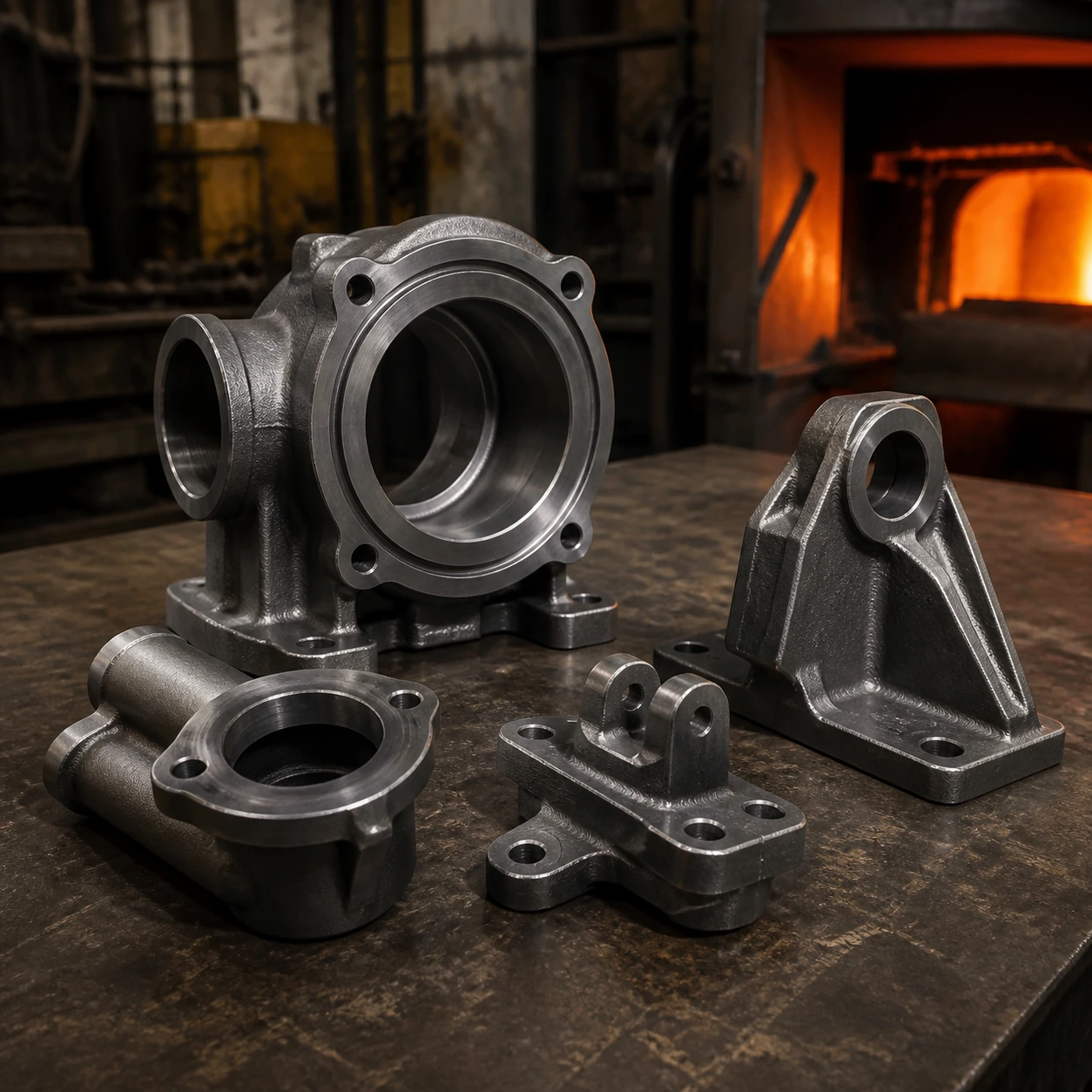
Heat-Resistant Cast Stainless Steel
- HK30 ASTM A297 HK30 · UNS J94203 · GX40CrNiSi25-12
- HK40 ASTM A297 HK40 · UNS J94204 · EN 1.4848
- HH ASTM A297 HH · UNS J93503 · EN 1.4837 cast
- HT ASTM A297 HT · UNS J94605
- HP ASTM A297 HP · UNS J95705 · GX40NiCrSi35-25
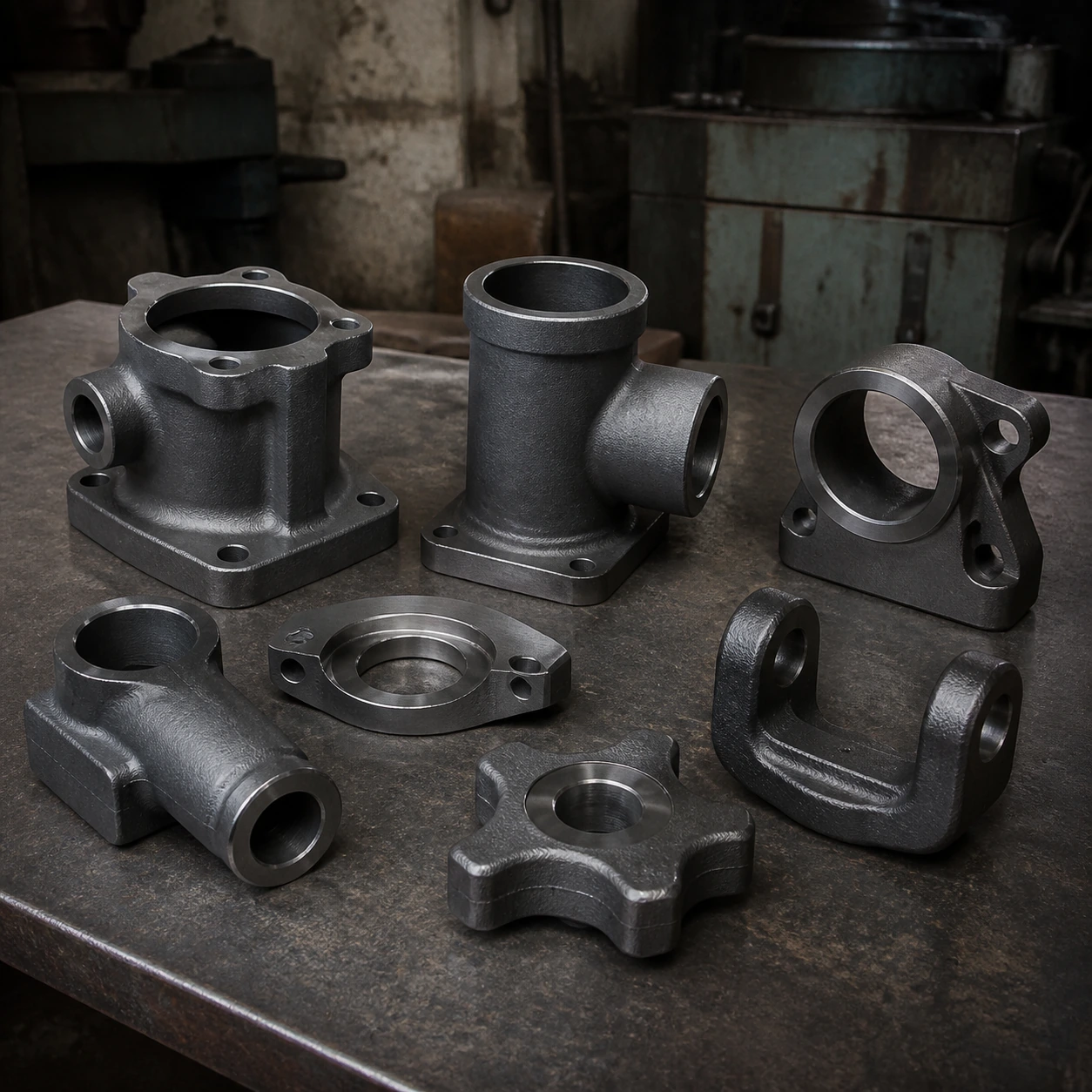
Carbon Steel Castings
- WCB ASTM A216 WCB · UNS J03002 · GP240GH · EN 1.0619
- WCC ASTM A216 WCC · UNS J02503
- WCA ASTM A216 WCA · UNS J02502
- LCB ASTM A352 LCB · UNS J03003
- LCC ASTM A352 LCC · UNS J02505
- AISI 1045 Cast ASTM A732 Gr 1045 · UNS G10450 · C45 · 45#

Low-Alloy Steel Castings
- AISI 4140 Cast ASTM A732 Gr 4140 · UNS G41400 · 42CrMo4 · EN 1.7225
- AISI 8620 Cast ASTM A732 Gr 8620 · UNS G86200 · 20CrNiMo
- WC6 ASTM A217 WC6 · UNS J12072 · 1.25Cr-0.5Mo · G17CrMo5-5
- WC9 ASTM A217 WC9 · UNS J21890 · 2.25Cr-1Mo · G17CrMo9-10
- C5 ASTM A217 C5 · UNS J42045 · 5Cr-0.5Mo
- C12A ASTM A217 C12A · UNS J84090 · Grade 91 · 9Cr-1Mo-V
- AISI 4340 Cast ASTM A732 Gr 4340 · UNS G43400 · 40CrNiMoA
Nickel-Base Alloy Castings
- Inconel 625 (CW6MC) ASTM A494 CW6MC · UNS N26625 · Inconel 625 · Alloy 625
- Inconel 718 AMS 5383 · UNS N07718 · Alloy 718 · GH4169
- Inconel 713C AMS 5391 · UNS N07713 · Alloy 713C
- Hastelloy C (CW6M) ASTM A494 CW6M · UNS N30107 · Hastelloy C cast
- Hastelloy C-276 (CW12MW) ASTM A494 CW12MW · UNS N30002 · Alloy C-276 cast
- Monel M-35-1 ASTM A494 M35-1 · UNS N24135 · Monel 400 cast
Cobalt-Base Alloy Castings
- CoCrMo (ASTM F75) ASTM F75 · UNS R30075 · CoCr28Mo6
- Stellite 6 UNS R30006 · CoCr-A · Alloy 6
- Stellite 12 UNS R30012 · Alloy 12
- X-40 (Co-Cr-W) AMS 5382 · UNS R30031 · Haynes 31
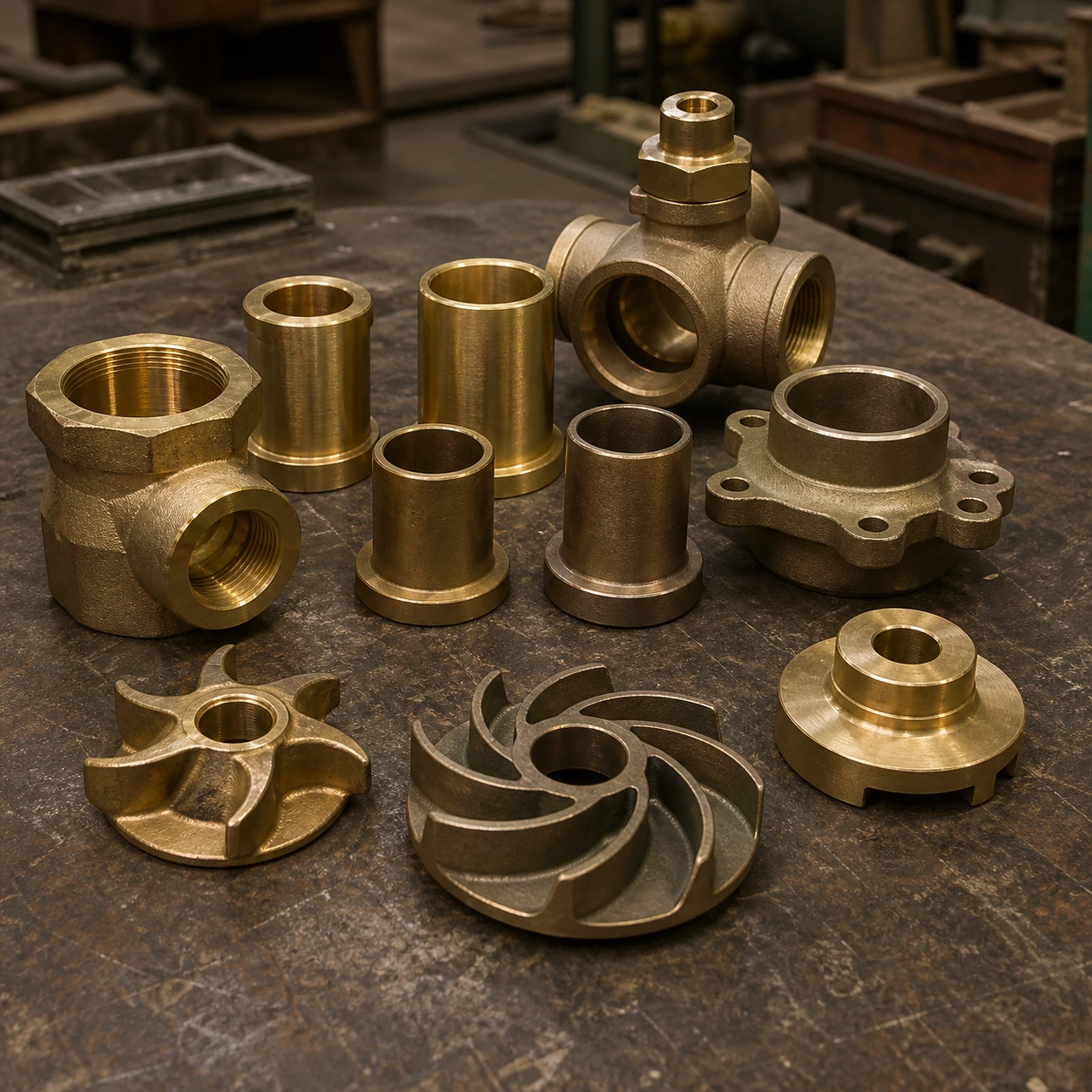
Bronze Castings
- C95800 Nickel Aluminum Bronze ASTM B148 C95800 · UNS C95800 · NAB · CuAl10Fe5Ni5
- C95500 Nickel Aluminum Bronze ASTM B148 C95500 · UNS C95500
- C90300 Tin Bronze ASTM B584 C90300 · UNS C90300 · 88-8-0-4
- C93200 Bearing Bronze ASTM B584 C93200 · UNS C93200 · SAE 660
Brass Castings
- C83600 Red Brass ASTM B584 C83600 · UNS C83600 · 85-5-5-5
- C87600 Silicon Brass ASTM B584 C87600 · UNS C87600
- C86300 Manganese Bronze ASTM B584 C86300 · UNS C86300
Aluminum Alloy Castings
- A356 / A356-T6 ASTM B26 A356 · UNS A13560 · AlSi7Mg0.3 · EN AC-42000
- A357 ASTM B26 A357 · UNS A13570 · AlSi7Mg0.6
- 355 / C355 ASTM B26 355 · UNS A03550 · AlSi5Cu1Mg
- A201-T7 ASTM B26 A201 · UNS A02010 · AlCu4MgTi
Titanium Castings
- Ti-6Al-4V (Grade 5) ASTM B367 Gr C-5 · UNS R56400 · TC4 · Ti-6-4
- CP Titanium Grade 2 ASTM B367 Gr C-2 · UNS R50400
Special & Wear Alloys
- Ni-Resist D-2 ASTM A439 D-2 · UNS F43000
- High-Chrome White Iron ASTM A532 Class III · 25Cr white iron
Technical Drawing
Every parameter below is editable, and the drawing redraws to match the values you choose. Picking a size snaps the other fields to that size's values; you can then override any one of them.
Request a Quotation
Send a drawing or a STEP file for a firm price and a castability review.
Dimensions & Parameters
| Size | Overall Length L (mm) | Overall Width W (mm) | Overall Height H (mm) | Wall Thickness T (mm) | Port Diameter ØD1 (mm) | Flange Diameter (mm) | Fillet Radius R (mm) | Casting Weight (kg) |
|---|---|---|---|---|---|---|---|---|
| DN15 | 140.4 | 89 | 133.4 | 3.6 | 15 | 89 | 3 | 0.85 |
| DN20 | 152.1 | 99 | 144.5 | 3.9 | 20 | 99 | 3 | 1.09 |
| DN25 | 165.1 | 108 | 156.8 | 4.2 | 25 | 108 | 3.5 | 1.39 |
| DN32 | 182 | 117 | 172.9 | 4.6 | 32 | 117 | 3.5 | 1.83 |
| DN40 | 214.5 | 127 | 203.8 | 5 | 40 | 127 | 4 | 2.64 |
| DN50 | 231.4 | 152 | 219.8 | 5.5 | 50 | 152 | 4.5 | 3.59 |
| DN65 | 247 | 178 | 234.6 | 6.4 | 65 | 178 | 5 | 5.02 |
| DN80 | 263.9 | 190 | 250.7 | 7.2 | 80 | 190 | 6 | 6.44 |
Frequently Asked Questions
What is a pillow block housing used for?
It is supplied into General Machinery, Automotive & Transport and Power Generation. What differs between those sectors is not the geometry but the alloy and the testing, which is why the specification matters more than the part number.
Why is the pillow block housing investment cast rather than machined?
The reason it is cast rather than machined is the internal cavity: the passage is formed by a core inside the wax pattern, so the wall thickness holds around a curve no drill can follow. Machining the same geometry from solid means removing most of the bar as swarf, and on a hard alloy that is where the cost sits.
What does a pillow block housing weigh?
Between 0.85 kg and 6.44 kg as cast across the 8 catalogued sizes, before machining allowance. The figure scales with alloy density, so the same geometry in aluminium weighs roughly a third of what it does in stainless.
What is the minimum order quantity?
There is no fixed minimum, but there is an honest threshold: investment casting is tooled per part, and below roughly 50 pieces a year the tooling charge usually dominates the unit price. Send the quantity with the drawing and we will tell you whether the process earns its tooling on your volume.
How do I request a quotation?
Configure the drawing on this page and submit the form, or send a drawing or STEP file directly. A drawing gets you a firm price and a castability review — the second one is the part that saves money, because a geometry comment is cheap before the die is cut and expensive afterwards.
More on the Pillow Block Housing
The full record for the pillow block housing — every catalogued size, the parametric drawing and the quote form — is on the Pillow Block Housing product page.
Each grade changes the price, the weight and what the part survives, so there is a page per grade for this part: WCB (the catalog grade), CF8M (the chloride-resistant default), CF3M (low carbon, for welded assemblies), CF8 (cheaper, where chlorides are absent), CD3MN (2205) (roughly double the yield strength) and CF3 (low carbon, no chlorides).
How it is shelled decides the tolerance and the surface you get, and the tolerance band is worked out against this part's own dimensions on each: Silica Sol Casting (DCTG 5 – 7, Ra 3.2 – 6.3 µm), Water Glass Casting (DCTG 7 – 9, Ra 6.3 – 12.5 µm) and Composite Shell Casting (DCTG 6 – 8, Ra 6.3 – 12.5 µm).
The specification and the testing change by sector more than the geometry does, so the pillow block housing is written up separately for General Machinery, Automotive & Transport and Power Generation.