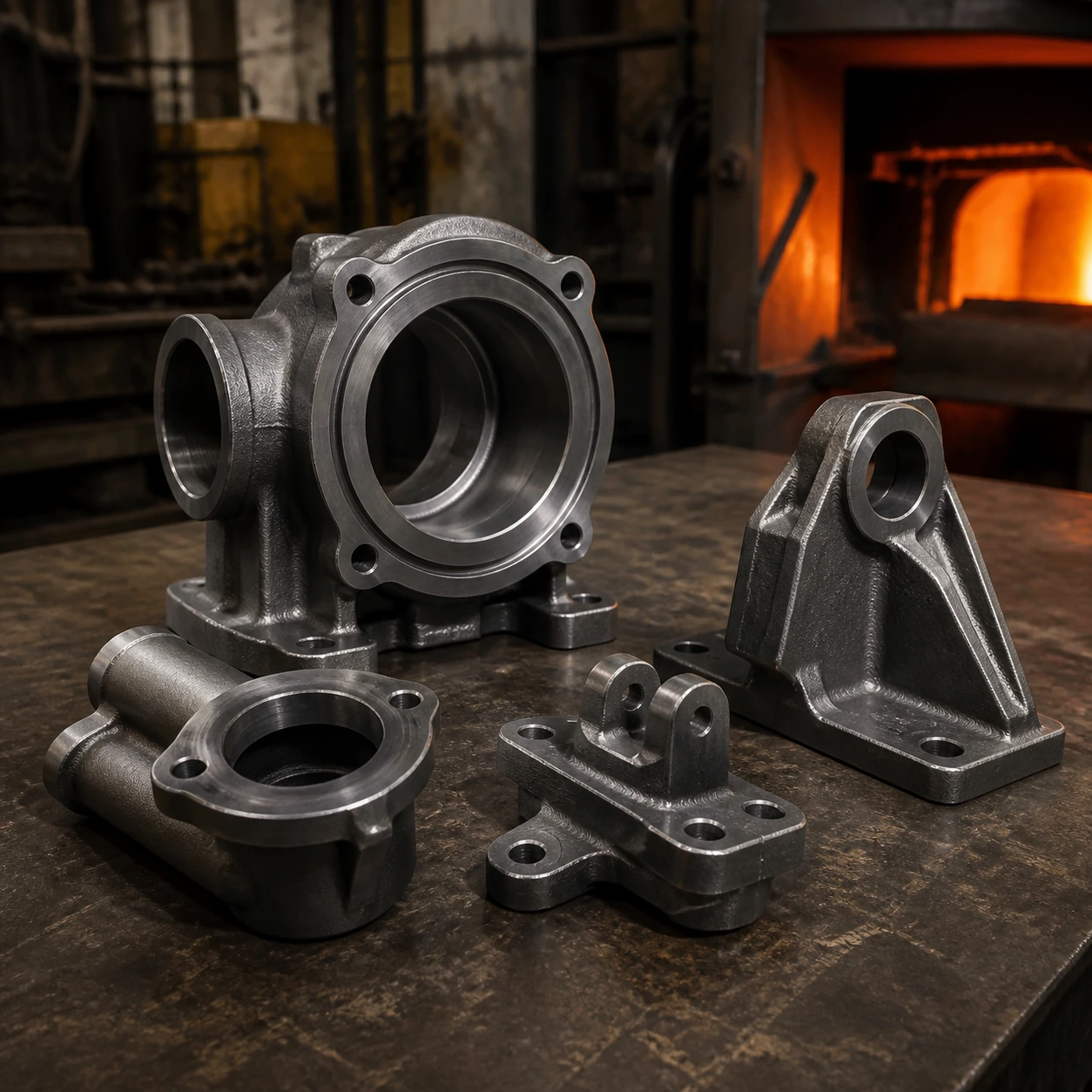
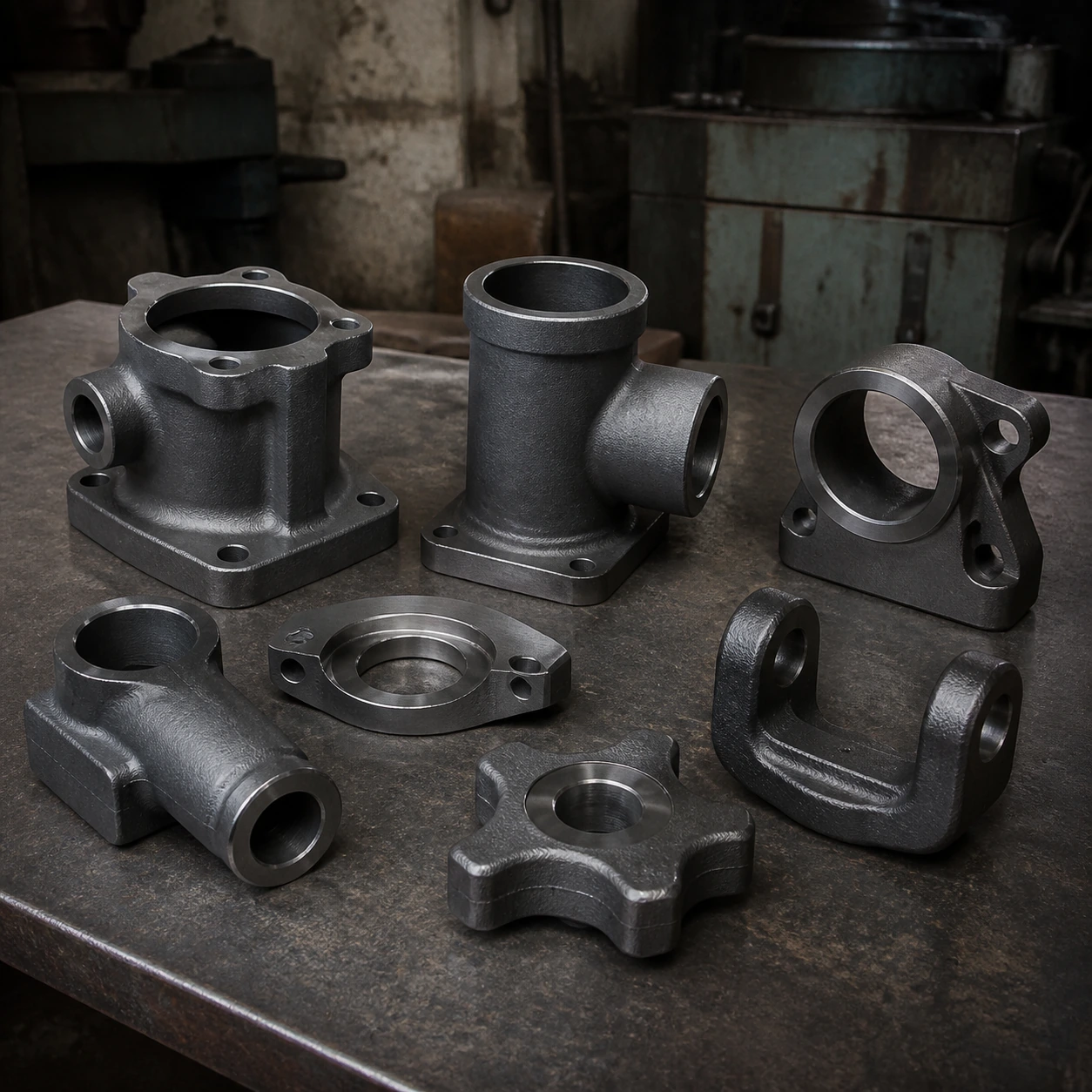
5 catalogued sizes, cast to ASTM A351 CF8M. Pick any row and the technical drawing redraws to it.
Submersible Pump Bottom Plate to ASTM A351 CF8M are catalogued in overall length 110 mm to 275 mm, with width 110-275 mm, height 24.2-60.5 mm, section thickness 6.6-16.5 mm. 5 sizes are held in the table below, and the technical drawing redraws to whichever row you select.
Specification
ASTM A351 CF8M
Alloys
CF8M, CF3M, CF8
Size range
110 mm-275 mm
Wide
110-275 mm
Catalogued sizes
5
Dimensions are nominal casting dimensions before machining allowance. Confirm the tolerance grade and the machined features against your drawing before ordering.
Alloys & Grades
The Submersible Pump Bottom Plate is cast in 12 of the 63 grades we work in. Those are listed first; the full reference tree is underneath, with each designation shown alongside its ASTM/UNS, EN and GB equivalents.
CF8Mcatalog gradeASTM A351 CF8M / UNS J92900 (cast 316)
CF3MASTM A351 CF3M / UNS J92800 (cast 316L)
CF8ASTM A351 CF8 / UNS J92600 (cast 304)
CF3ASTM A351 CF3 / UNS J92500 (cast 304L)
CA6NMASTM A743 CA6NM / UNS J91540
CA15ASTM A743 CA15 / UNS J91150 (cast 410)
CD3MN (2205)ASTM A890 Gr 4A / UNS J92205 (cast 2205 duplex)
CE3MN (2507)ASTM A890 Gr 5A / UNS J93404 (cast 2507 super duplex)
C83600 Red BrassASTM B584 C83600 · UNS C83600 · 85-5-5-5
C87600 Silicon BrassASTM B584 C87600 · UNS C87600
C86300 Manganese BronzeASTM B584 C86300 · UNS C86300
Aluminum Alloy Castings
A356 / A356-T6ASTM B26 A356 · UNS A13560 · AlSi7Mg0.3 · EN AC-42000
A357ASTM B26 A357 · UNS A13570 · AlSi7Mg0.6
355 / C355ASTM B26 355 · UNS A03550 · AlSi5Cu1Mg
A201-T7ASTM B26 A201 · UNS A02010 · AlCu4MgTi
Titanium Castings
Ti-6Al-4V (Grade 5)ASTM B367 Gr C-5 · UNS R56400 · TC4 · Ti-6-4
CP Titanium Grade 2ASTM B367 Gr C-2 · UNS R50400
Special & Wear Alloys
Ni-Resist D-2ASTM A439 D-2 · UNS F43000
High-Chrome White IronASTM A532 Class III · 25Cr white iron
Technical Drawing
Every parameter below is editable, and the drawing redraws to match the values you choose. Picking a size snaps the other fields to that size's values; you can then override any one of them.
Sends the selected values to the quote form below.
Request a Quotation for Submersible Pump Bottom Plate
The form below follows the current drawing configuration. Change the values above and the request updates with them. Attaching a drawing or a STEP file is the fastest route to a firm price.
Dimensions & Parameters (ASTM A351 CF8M)
Nominal casting dimensions before machining allowance. Every row is a starting point for the customizer above — pick any size and the drawing redraws to it.
Size
Overall Length L (mm)
Overall Width W (mm)
Overall Height H (mm)
Main Thickness T (mm)
Hole Diameter ØD (mm)
Min. Wall Thickness (mm)
Fillet Radius R (mm)
Casting Weight (kg)
110 mm
110
110
24.2
6.6
7
4.1
5.5
0.69
140 mm
140
140
30.8
8.4
8
5.2
6.5
1.41
175 mm
175
175
38.5
10.5
10
6.5
8.5
2.76
220 mm
220
220
48.4
13.2
13
8.2
10
5.48
275 mm
275
275
60.5
16.5
16
10.2
10
10.71
Produced to ASTM A351 CF8M, the Submersible Pump Bottom Plate is a pump casting from lostwaxcasting.net. Every listed size drives the technical drawing above, so the dimensions you see are the dimensions you quote against.
What Is a Submersible Pump Bottom Plate?
The Submersible Pump Bottom Plate is a pump casting. It is selected by overall length together with the wall thickness and the hole or port geometry shown in the table below, and is supplied in a range of alloys and surface conditions to suit the service.
How This Part Is Cast
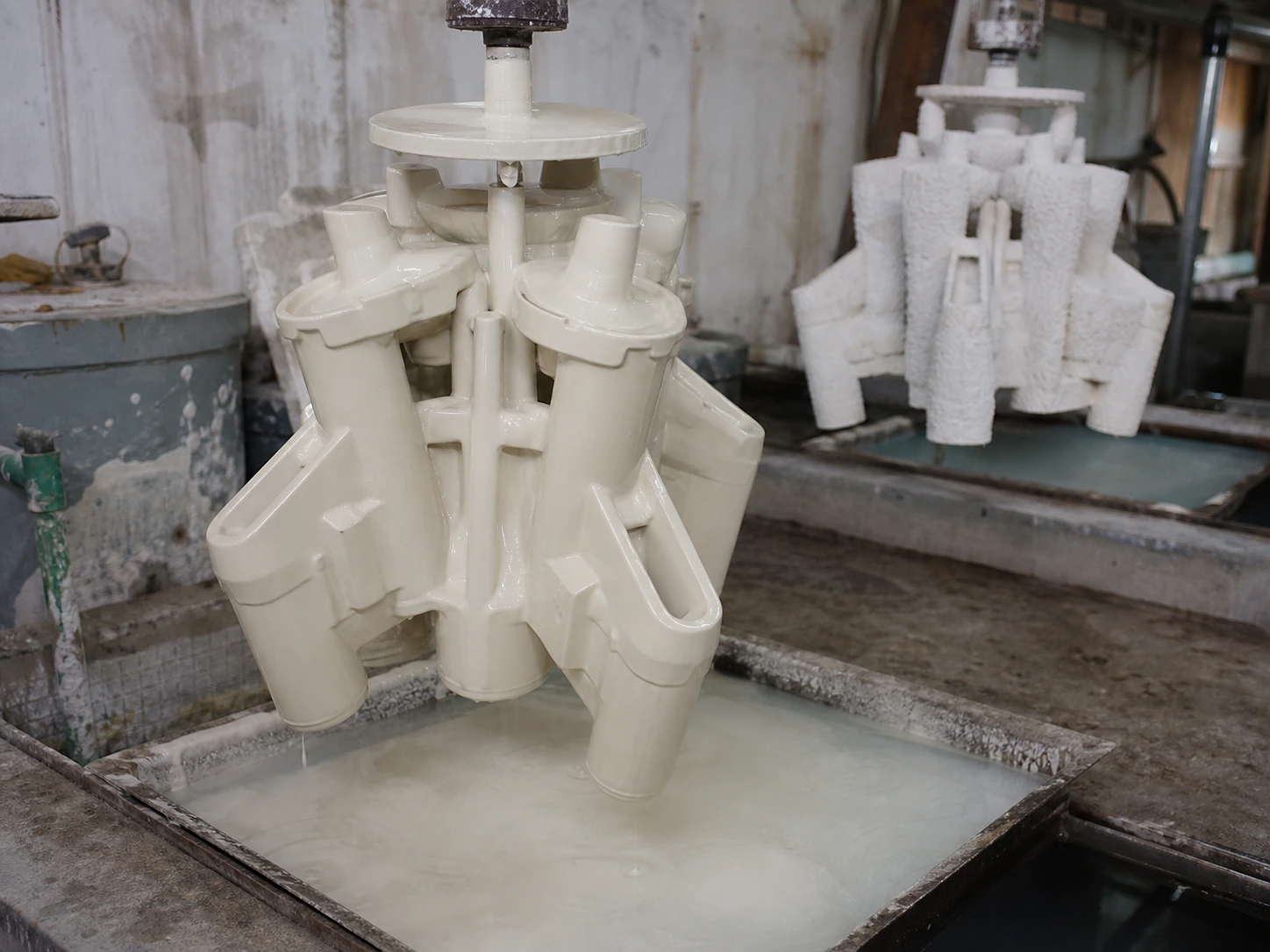
A wax pattern is injected into a metal die, assembled onto a runner system, dipped repeatedly in ceramic slurry to build a shell, dewaxed, fired and poured. The result is a casting that reproduces the pattern closely enough that most surfaces need no machining at all, which is what makes the process worth its tooling cost at production quantity.
Alloy Options
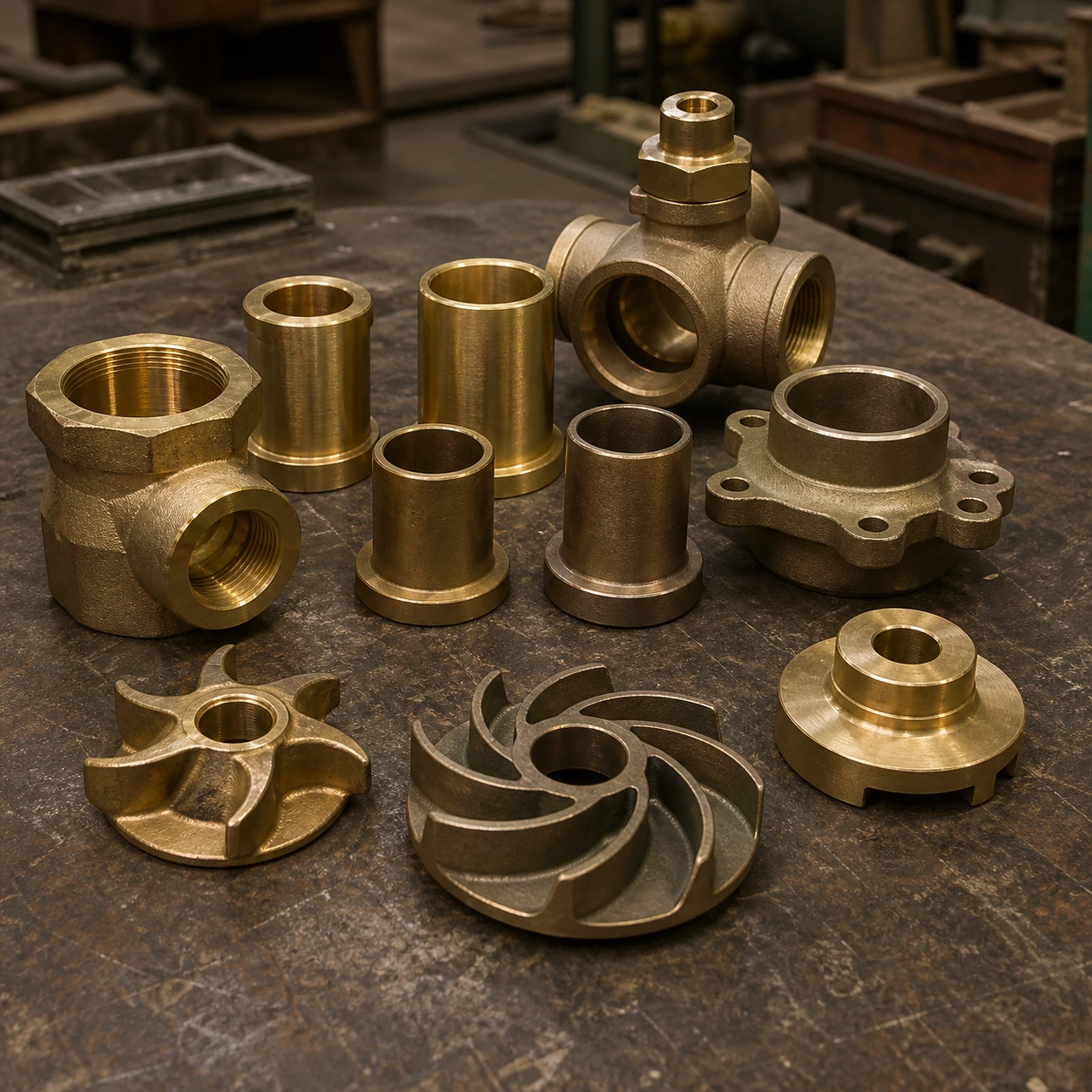
The catalog specification calls for CF8M. This part is supplied in CF8M, CF3M, CF8, CF3, CA6NM, CA15, CD3MN (2205) and CE3MN (2507). The alloy drives both price and lead time more than any other choice on the RFQ, so state it if your drawing calls one out — and if it does not, describe the service (the medium, the temperature and the pressure) and we will propose one.
Tolerances, Finish & Machining
As-cast dimensions are held to ISO 8062-3 DCTG 6-8 on a silica sol shell, which is roughly ±0.3 mm on a 50 mm feature and widens with size. As-cast surface finish is typically Ra 3.2-6.3 µm. A machining allowance of 1.5-3 mm is added to the faces called out on the drawing; every other surface is supplied as-cast. State the tolerance grade and the finish you need on the RFQ — both change the price, and a tolerance nobody asked for is the most common avoidable cost on a casting.
Inspection & Testing
Chemical composition by spectrometer on every heat, with the certificate supplied against the specified grade.
Dimensional inspection against the drawing, with a first-article report on new tooling.
Hydrostatic shell test at 1.5 times the rated pressure, per the applicable pressure standard.
Radiographic or dye-penetrant examination of the pressure boundary where the order calls for it.
Hardness testing on the wear surfaces after heat treatment.
The Submersible Pump Bottom Plate is made to order. Pricing starts from approximately US$10.40 per piece for the smallest listed size in CF8M at production quantity; the final figure depends on pour weight, alloy, machining scope, surface finish and order quantity, and tooling is a separate one-time charge. Submit the configuration above for a firm quotation.
Inside the plant
Manufactured in our own plant
This part is cold-formed, threaded, heat-treated and finished in-house. The stages below are where its class and finish are actually decided.
01
Tooling & wax injection
An aluminum die is cut from your drawing or 3D model, and wax is injected into it under pressure. Everything downstream is a copy of this pattern, so the die is where the tolerance is actually decided — not on the shop floor afterwards.
First-article dimensional report on every new die before production wax is run.
02
Tree assembly & gating
Patterns are welded onto a wax runner to form a tree. How they are gated is not cosmetic: the gate positions decide which sections solidify last, and a heavy section fed from the wrong direction is where shrinkage porosity comes from.
Gating reviewed against the part's heaviest section before the first tree is built.
03
Ceramic shell building
The tree is dipped in ceramic slurry and stuccoed with refractory grain, six to eight times, drying between coats. The face coat is what the casting surface copies, which is why a silica sol face gives Ra 3.2-6.3 µm where a water-glass shell gives a coarser one.
Slurry viscosity and drying room temperature and humidity logged per coat.
04
Dewaxing
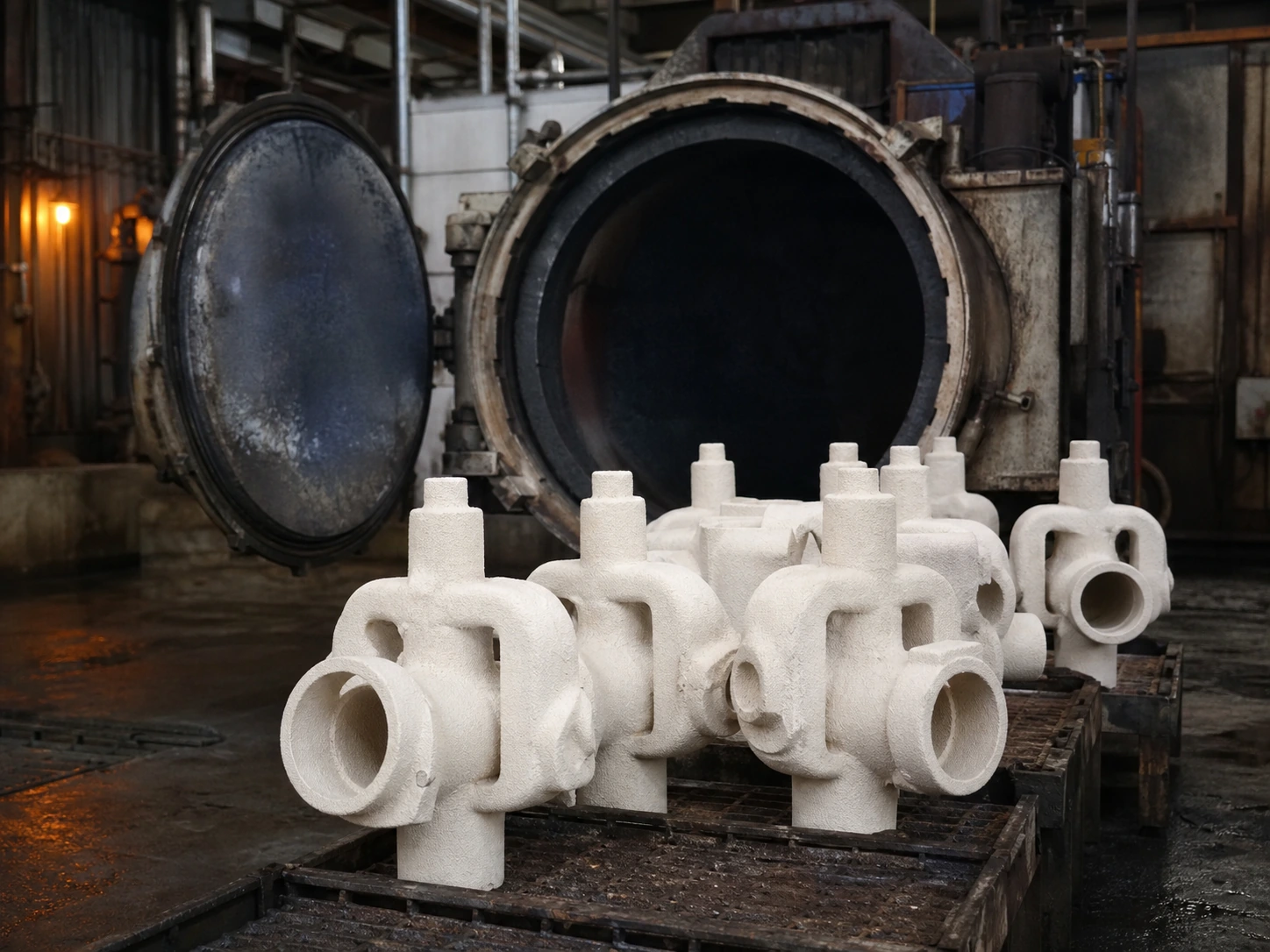
A steam autoclave melts the wax out fast, so that the wax — which expands more than the ceramic does — leaves before it can split the shell. Recovered wax is filtered and reused for gating rather than for patterns.
Every shell inspected for cracks after dewax; a cracked shell is scrapped, not patched.
Video: Submersible Pump Bottom Plate
Third-party video, selected automatically for this topic. It is not produced by Lost Wax Casting and is not a specification source — use the tables on this page for dimensional data.
Frequently Asked Questions
What standard is the Submersible Pump Bottom Plate cast to?
The Submersible Pump Bottom Plate is cast to ASTM A351 CF8M. The dimensions on this page follow that specification, and the material certificate supplied with the order is issued against it.
What is the size range of the Submersible Pump Bottom Plate?
The table on this page lists 5 sizes for the Submersible Pump Bottom Plate by overall length, from 110 mm to 275 mm. Sizes outside the table are quoted on request — investment casting is tooled per part, so a new size is a new pattern die rather than a stock item.
Which alloys is the Submersible Pump Bottom Plate cast in?
The catalog specification calls for CF8M. The Submersible Pump Bottom Plate is supplied in CF8M, CF3M, CF8, CF3, CA6NM and CA15. The alloy drives both the price and the lead time more than any other choice on the RFQ, so state it if your drawing calls one out — and if it does not, describe the service (the medium, the temperature and the pressure) and we will propose one.
What wall thickness does the Submersible Pump Bottom Plate have?
The listed sizes run from 4.1 mm to 10.2 mm of nominal wall. Investment casting will hold a section down to about 1.5 mm in the silica sol shell used here — 0.6 mm on a small isolated feature — and the thin end of that range is a shell-filling question rather than a strength one. A section much heavier than the surrounding wall is the more common problem: it solidifies last and shrinks, so it is fed or cored rather than left solid.
Is the Submersible Pump Bottom Plate pressure tested?
Yes. The Submersible Pump Bottom Plate is a pressure-retaining part, so the shell is hydrostatically tested at 1.5 times the rated pressure per the applicable pressure standard, and radiographic or dye-penetrant examination of the pressure boundary is available where the order calls for it. State the pressure class and the test standard on the RFQ.
How do I request a quotation?
Set the configuration on the technical drawing above — size, alloy, finish — and click "Request this configuration". The values carry into the quote form below it. Attach a drawing or a STEP file if you have one; it is the fastest route to a firm price, and it lets us flag any castability issue before you commit to tooling.
Guides for the Submersible Pump Bottom Plate
Each grade changes the price, the weight and what the part survives, so there is a page per grade for this part: CF8M (the catalog grade), WCB (the carbon-steel cost baseline), CA6NM (tough and cavitation resistant), CF3M (low carbon, for welded assemblies), CF8 (cheaper, where chlorides are absent) and CA15 (hardenable, for wear-loaded duty).
How it is shelled decides the tolerance and the surface you get, and the tolerance band is worked out against this part's own dimensions on each: Silica Sol Casting (DCTG 5 – 7, Ra 3.2 – 6.3 µm), Water Glass Casting (DCTG 7 – 9, Ra 6.3 – 12.5 µm) and Composite Shell Casting (DCTG 6 – 8, Ra 6.3 – 12.5 µm).
If the question is still whether a casting is the right way to make this part at all, the Submersible Pump Bottom Plate application guide covers where it is used, what has to be decided before a price exists, and where investment casting is the wrong answer.
Need a casting quote or a castability review?Message our engineers on WhatsApp — send a drawing or DIN number and get pricing back fast.Start WhatsApp Chat →
This website uses only necessary and functional cookies to operate, secure, and improve basic website performance.
We do not use advertising cookies, Google Analytics, or cross-site tracking technologies.
Privacy Policy